
E-Commerce Export from India Introduction : India offers entrepreneurs and small businesses significant opportunities to sell products to customers around the world. With the growth of international online marketplaces, digital payments, cross-border logistics, and digital marketing, businesses can explore overseas markets without necessarily establishing a physical store in another country.
From Indian handicrafts, textiles, home décor, jewellery, and spices to specialised industrial products, many categories may have international demand. However, building a successful export business requires more than listing products online. You need to select the right products, understand export regulations, calculate costs accurately, choose reliable shipping partners, receive international payments, and attract customers in your target markets.
This guide explains how to start an e-commerce export business from India in 2026, covering the process from product research and registration to international sales, shipping, marketing, and business expansion.
Whether you are a beginner, manufacturer, wholesaler, artisan, or existing online seller, this guide will help you understand the key steps involved.
What Is E-Commerce Export from India?
E-commerce export means selling products from India to customers or businesses located in other countries through online channels.
These sales may take place through international marketplaces, a company’s own website, social commerce channels, or business-to-business platforms.
For example, an Indian manufacturer may sell cotton clothing to customers in the United States, a handicraft business may receive orders from Europe, or a home décor brand may sell products to buyers in Australia.
E-commerce exports can generally be divided into three categories:
1. Business-to-Consumer (B2C) Exports
An Indian business sells directly to individual international customers through an online marketplace or its own website.
2. Business-to-Business (B2B) Exports
An Indian supplier sells products in bulk to foreign importers, retailers, distributors, or other businesses. Orders may originate through online marketplaces, trade directories, or direct enquiries.
3. Direct-to-Consumer (D2C) International Sales
An Indian brand operates its own website and sells directly to international consumers, building its own brand identity and customer relationships.
The right model depends on your products, budget, operational capabilities, and long-term business goals.
Why Start an E-Commerce Export Business in India in 2027?
There are several reasons entrepreneurs may consider international e-commerce.
1. Access to International Customers
Selling internationally allows businesses to reach customers beyond India’s domestic market. A specialised product that serves a relatively small domestic audience may appeal to a larger audience in a particular overseas market.
2. Opportunity to Build a Global Brand
Instead of competing only on domestic marketplaces, a business can develop an international brand through its own website, marketplace storefront, content marketing, and customer experience.
3. Digital Platforms Simplify Market Access
International marketplaces and e-commerce platforms can help sellers display products, receive orders, and manage aspects of international selling. Their availability, fees, eligibility rules, and fulfilment services vary.
4. Opportunities for Indian Products
Products rooted in Indian craftsmanship, materials, design, or specialised manufacturing may appeal to international buyers. However, demand must be validated through research rather than assumed from a product’s origin.
5. Multiple Business Models
You can start as a manufacturer, reseller, private-label brand, artisan, merchant exporter, or B2B supplier, subject to applicable laws and platform rules.
Important: International sales are not automatically more profitable than domestic sales. Shipping, returns, customs duties, marketplace fees, taxes, advertising, and currency fluctuations can significantly affect profitability.
Step 1: Choose the Right Products for Export

Product selection is one of the most important decisions in an export business. A product may be popular in India but unsuitable for a particular international market because of shipping costs, regulations, competition, or customer preferences.
Begin by identifying products that you can source consistently, package safely, price competitively, and sell with a reasonable margin.
Product Categories to Research
Indian Textiles and Apparel
- Cotton clothing
- Scarves and stoles
- Home textiles
- Cushion covers
- Table linen
- Specialised fashion accessories
Handicrafts and Home Décor
- Decorative products
- Handmade gifts
- Artisan-made home accessories
- Wooden décor, where legally permitted
- Metal or textile crafts
Jewellery and Accessories
- Fashion jewellery
- Beaded accessories
- Handmade ornaments
- Non-precious-metal accessories
Precious metals, gemstones, and certain jewellery products may have additional export, customs, hallmarking, or destination-market requirements.
Beauty and Personal Care
- Selected personal-care products
- Cosmetics
- Hair-care products
These categories require careful checks of ingredient restrictions, product registration, labelling, and destination-country regulations.
Food and Agricultural Products
- Packaged food
- Tea and coffee
- Spices
- Selected agricultural products
Food and agricultural exports may require product-specific licences, health certificates, testing, packaging compliance, and import approvals.
Specialised and Industrial Products
- Components
- Tools
- Selected machinery parts
- Packaging materials
- Business supplies
These products may be suitable for B2B exports where buyers place larger or recurring orders.
How to Evaluate an Export Product
Before investing in inventory, assess the following factors:
- International demand and customer search behaviour.
- Number and strength of existing competitors.
- Product sourcing cost and quality consistency.
- Packaging and international shipping requirements.
- Product weight, dimensions, and breakage risk.
- Applicable Indian export rules and destination-country regulations.
- Marketplace restrictions and fees.
- Expected selling price and contribution margin.
- Return, replacement, and customer-support costs.
- Potential for repeat purchases or bulk orders.
Do not select a product solely because a social media video claims it is profitable. Validate demand, costs, and compliance before committing significant capital.
Step 2: Research Your Target International Market

Once you have shortlisted products, identify the countries where they are most likely to sell.
The United States, United Kingdom, Canada, Australia, and selected European markets may be worth investigating for certain product categories. However, no single country is ideal for every exporter.
How to Research a Target Market
Study Search Demand
Use keyword research tools to understand what customers search for, the language they use, and the specific features they value.
For example, buyers may search for handmade cotton cushion covers, artisan home décor, or sustainable fabric accessories rather than simply searching for Indian products.
Analyse Competitors
Review competing products on marketplaces and independent websites. Study their prices, product descriptions, customer reviews, shipping policies, images, packaging, and positioning.
Examine Customer Reviews
Customer reviews can reveal product gaps, such as poor packaging, inaccurate sizing, inconsistent quality, or limited design choices. These insights may help you create a more competitive offer.
Check Import Regulations
Before choosing a market, investigate customs requirements, product restrictions, labelling rules, safety standards, taxes, and any licences required for your product.
Compare the Economics
A market with high demand may still be unsuitable if shipping costs, advertising expenses, duties, or returns make the product unprofitable.
Build a Market Research Sheet
For every shortlisted country, record:
- Estimated customer demand
- Competitor selling prices
- Shipping estimates
- Marketplace availability
- Import duties and taxes
- Product compliance requirements
- Advertising competition
- Expected contribution margin
Choose your initial market based on evidence, not assumptions.
Step 3: Select Your Export Business Model
There are several ways to sell products internationally from India.
Model 1: Sell Through International Marketplaces
You list products on an established marketplace that accepts eligible Indian sellers.
Advantages include access to an existing customer base, marketplace search traffic, and potentially integrated payment or fulfilment services.
Challenges include platform fees, competition, eligibility requirements, account policies, and limited control over the customer relationship.
Model 2: Build Your Own International E-Commerce Website
You operate an independent online store using an e-commerce platform or custom-built website.
Advantages include greater control over branding, product presentation, customer experience, and first-party marketing.
Challenges include generating traffic, building customer trust, integrating international payments, managing shipping, and handling customer support.
Model 3: Sell Through B2B Channels
You use trade directories, supplier platforms, professional networks, industry events, and direct outreach to attract foreign importers or distributors.
This model can be suitable for manufacturers, wholesalers, and businesses capable of fulfilling bulk orders.
Model 4: Combine Marketplaces and Your Own Website
Some businesses use marketplaces to validate demand and their own websites to build a distinctive brand.
This approach may diversify customer acquisition, but each channel requires its own operational planning, cost analysis, and compliance checks.
Step 4: Complete the Essential Export Registrations in India
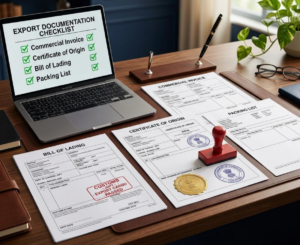
Before exporting, identify which registrations, tax requirements, and product-specific approvals apply to your business.
The exact requirements depend on your legal structure, products, transaction type, export route, and current regulations.
1. Choose a Business Structure
You may operate as a sole proprietorship, partnership, Limited Liability Partnership (LLP), or company, depending on your requirements.
Consider ownership, liability, taxation, documentation, banking, and future investment plans when choosing a structure.
2. Obtain a PAN and Business Bank Account
Ensure the relevant proprietor or business entity has the required Permanent Account Number (PAN) and banking arrangements.
Discuss international remittances, foreign-currency receipts, documentation, and export-related banking procedures with your authorised bank.
3. Obtain an Importer Exporter Code (IEC), Where Required
The Importer Exporter Code, commonly called IEC, is a key identifier used for import and export activities in India.
Eligible businesses generally apply through the Directorate General of Foreign Trade (DGFT). Confirm the latest exemptions, application requirements, and maintenance obligations before proceeding.
Official website: https://www.dgft.gov.in/
4. Understand GST Requirements
Exports are generally treated as zero-rated supplies under India’s GST framework, subject to applicable conditions.
Eligible exporters may be able to export under a Letter of Undertaking (LUT) without payment of integrated GST or use another permitted route, depending on current rules and their circumstances.
GST registration, invoicing, return filing, input tax credit, refunds, and documentation requirements should be reviewed with a qualified tax professional.
Official website: https://www.cbic.gov.in/
5. Understand AD Code and Customs Requirements
An Authorised Dealer (AD) Code is associated with export-related banking and customs procedures. The exact process and documentation depend on the export route and the relevant customs or courier arrangements.
Confirm the applicable requirements with your authorised bank, customs broker, courier, or freight forwarder before dispatching goods.
6. Check Product-Specific Registrations
Depending on the product, you may need additional registrations, licences, certificates, or approvals.
Examples include:
- Food-related registrations and export requirements
- Plant or animal health certificates
- Product testing and safety documentation
- Cosmetics or chemical compliance
- Quality-control orders or mandatory standards
- Restricted-goods permissions
- Sector-specific registrations
The relevant export promotion council or government authority can help identify requirements for your product category.
7. Check Destination-Country Rules
Indian export clearance does not automatically mean that a product can legally enter every foreign market.
Check the destination country’s requirements for product safety, labelling, packaging, ingredients, certifications, import permits, and taxes.
Important: Regulations can change. Verify requirements with the relevant official authorities and qualified professionals before accepting orders or shipping products.
Step 5: Understand Export Documents
Export documentation varies by product, destination, transaction, and shipping method. Common documents may include the following.
Commercial Invoice
Records the seller, buyer, product description, quantity, value, currency, and other transaction details.
Packing List
Describes the packages, contents, quantities, weights, and dimensions.
Shipping Bill or Bill of Export
A customs declaration used under the applicable export procedure. The specific document and filing process depend on the shipping route.
Air Waybill or Bill of Lading
A transport document used by the relevant carrier for air or sea shipments.
Certificate of Origin
May be required by the buyer or importing country to establish a product’s origin. Requirements vary by destination and applicable trade arrangements.
Product-Specific Certificates
Certain products may require testing reports, health certificates, inspection documents, licences, or other approvals.
Banking and Payment Records
Exporters should maintain relevant payment, remittance, and export-realisation documentation according to applicable requirements.
Ask your customs broker, courier, freight forwarder, and authorised bank which documents are required for your exact shipment.
Step 6: Choose the Right International Shipping Method

Shipping directly affects customer experience and profitability.
International Courier
Courier services can be suitable for small parcels, samples, and certain direct-to-consumer orders. They may provide tracking and simplified handling for eligible shipments.
However, rates, serviceable destinations, product restrictions, documentation, and customs procedures vary by provider.
Postal Export
Postal channels may be suitable for eligible small shipments and certain product categories. Check the current services, limits, documentation, and customs procedures with India Post.
Official website: https://www.indiapost.gov.in/
Air Freight
Air freight may be suitable for time-sensitive or higher-value shipments, depending on the shipment’s size and economics.
Sea Freight
Sea freight can be appropriate for larger or heavier consignments where transit time and minimum shipment requirements are commercially acceptable.
How to Compare Shipping Providers
Compare:
- Total cost, including surcharges
- Delivery estimates and service coverage
- Tracking quality
- Customs-clearance support
- Insurance and loss policies
- Packaging requirements
- Restricted-product policies
- Returns and reverse logistics
- Customer-service availability
Do not choose a carrier based only on the advertised base rate. Ask for a complete quote that reflects your parcel dimensions, actual weight, destination, and product type.
Step 7: Calculate the True Cost of Exporting
One of the most common mistakes in international e-commerce is calculating profit using only the product’s purchase or manufacturing cost.
Your export pricing should account for the complete cost of fulfilling an order.
Common Cost Components
- Product manufacturing or purchase cost
- Quality inspection
- Packaging and labelling
- Domestic transport
- Export handling and documentation
- International shipping
- Insurance, where applicable
- Marketplace commission
- Payment-processing fees
- Currency conversion charges
- Advertising expenses
- Returns and refunds
- Warehousing and fulfilment
- Applicable taxes and duties, depending on the selling model
Example of an Export Order Calculation
The following figures are hypothetical and are provided only to demonstrate the calculation.
Assume a product sells for ₹3,000.
- Product cost: ₹900
- Packaging and domestic handling: ₹150
- International shipping: ₹650
- Marketplace and payment fees: ₹360
- Advertising allocation: ₹300
- Other estimated order costs: ₹140
Total estimated cost: ₹2,500
Estimated contribution before any omitted costs, taxes, and overheads: ₹500.
This example does not represent a typical or guaranteed export margin. Actual results depend on the product, market, shipping rate, platform, taxes, returns, and advertising performance.
Use a Contribution-Margin Calculation
Contribution per order = Net sales revenue − Variable costs attributable to the order.
Contribution margin percentage = Contribution per order ÷ Net sales revenue × 100.
Build a spreadsheet that includes conservative, expected, and optimistic scenarios. Test what happens if shipping costs increase, the currency moves against you, or advertising becomes more expensive.
Step 8: Understand International Payments and Incoterms
Before accepting an international order, establish how payment, delivery responsibilities, customs clearance, and duties will be handled.
International Payment Options
Depending on the business model and transaction, payment may be received through:
- Marketplace payment systems
- Eligible international payment providers
- Bank transfers
- Other permitted cross-border payment arrangements
Confirm the provider’s eligibility for Indian businesses, settlement process, charges, currency conversion, refund rules, and documentation requirements.
Avoid accepting payments through arrangements that violate applicable foreign-exchange regulations or platform rules.
What Are Incoterms?
Incoterms are internationally recognised trade terms that allocate certain responsibilities, costs, and risks between buyers and sellers in a sales contract.
Common examples include:
- EXW: Ex Works
- FCA: Free Carrier
- FOB: Free on Board
- CIF: Cost, Insurance and Freight
- DAP: Delivered at Place
- DDP: Delivered Duty Paid
Not every term is suitable for every transport method or transaction. For example, some Incoterms are designed specifically for sea and inland waterway transport.
Understand which party is responsible for transport, insurance, export clearance, import clearance, and duties. For complex or high-value transactions, seek professional trade advice.
Step 9: Sell Internationally Through Amazon Global Selling
Amazon Global Selling is one option for eligible Indian businesses interested in selling through Amazon marketplaces in other countries.
The exact registration requirements, product categories, fees, fulfilment options, and available marketplaces vary.
Basic Steps
1. Research the Destination Marketplace
Select a country and marketplace based on customer demand, competition, shipping economics, and product compliance.
2. Review Seller Eligibility
Check the current Amazon requirements for Indian sellers, including identity, business, banking, tax, and product-related information.
3. Prepare Product Listings
Create accurate product titles, bullet points, descriptions, images, variations, and other required listing information.
4. Calculate All Selling Costs
Review referral fees, fulfilment charges, storage fees, advertising expenses, returns, taxes, and other applicable costs.
5. Choose a Fulfilment Method
Depending on eligibility and availability, you may ship orders yourself or use an eligible marketplace fulfilment service.
6. Launch and Optimise
Monitor impressions, click-through rate, conversion rate, advertising spend, returns, reviews, and contribution margin.
Official resource: https://sell.amazon.in/
Marketplace rules and programmes can change. Verify current terms before investing in inventory or advertising.
Step 10: Explore Etsy and Other International Marketplaces
Different marketplaces serve different customer segments. Select platforms according to your products and eligibility rather than trying to list everywhere immediately.
Etsy
Etsy may be relevant to eligible handmade, vintage, craft-supply, and other permitted categories under its current policies.
Sellers must review Etsy’s creativity standards, product eligibility, payment requirements, fees, and country-specific onboarding rules.
Official resource: https://www.etsy.com/sell
eBay
eBay may be worth researching for eligible products with international demand. Check seller eligibility, shipping options, listing policies, payment arrangements, and prohibited items.
Official resource: https://www.ebay.com/
Other Platforms
Depending on the product and business model, consider suitable B2B marketplaces, specialist marketplaces, or regional e-commerce platforms.
Before selecting a platform, evaluate its customer base, seller eligibility, fees, fulfilment options, advertising tools, and dispute policies.
Step 11: Build Your Own International E-Commerce Website
An independent website gives you greater control over your brand, product pages, customer experience, and marketing.
You can use a hosted e-commerce platform or develop a custom website based on your requirements.
Essential Website Features
- Professional design
- Mobile-friendly layout
- Clear product photographs
- Accurate product specifications
- International currency and pricing clarity
- Secure checkout
- Eligible payment methods
- Shipping estimates
- Customs and duty information
- Return and refund policies
- Contact details and customer support
- Privacy policy and terms
- Relevant trust signals
Select the Right E-Commerce Platform
Consider platforms based on your budget, technical requirements, integrations, payment options, international shipping features, and ability to support your target markets.
Official resource: https://www.shopify.com/
Other platforms may also be suitable. Compare their total costs and features before committing.
Create Product Pages That Convert
Every product page should answer the buyer’s most important questions.
Include:
- A clear product title
- High-quality images from multiple angles
- Accurate dimensions and materials
- Colour and size information
- Product benefits and practical uses
- Care instructions, where relevant
- Processing and delivery estimates
- Transparent shipping and return policies
- Genuine customer reviews, when available
Avoid misleading claims, fabricated testimonials, copied descriptions, and unverified product certifications.
Step 12: Create an International Digital Marketing Strategy

Listing a product online does not guarantee sales. International buyers must discover your products, trust your business, understand your offer, and feel confident completing a purchase.
A structured digital marketing strategy can help you build visibility and generate qualified traffic.
1. International SEO
Search engine optimisation helps your website appear for relevant searches in your target markets.
Start with keyword research for each market and product category. Use the language and terminology customers actually use.
Optimise:
- Page titles and meta descriptions
- Product titles and descriptions
- Image alt text
- Category pages
- Internal links
- Technical performance
- Mobile usability
- Structured data where appropriate
- Relevant buying guides and educational content
For websites targeting different languages or countries, use an appropriate URL structure and implement international targeting features correctly. Avoid automatically duplicating nearly identical pages without meaningful localisation.
SEO takes time and does not guarantee rankings.
2. Google Ads
Google Ads can help you reach people searching for specific products or solutions.
Before launching a campaign:
- Choose a clearly defined target country.
- Verify product and advertising policy eligibility.
- Calculate a sustainable customer acquisition cost.
- Create relevant landing pages.
- Set up accurate conversion tracking.
- Test keywords, advertisements, and landing pages.
- Monitor profitability rather than clicks alone.
Start with a controlled budget and scale only when the results support it.
Official resource: https://ads.google.com/
3. Meta Ads
Facebook and Instagram advertising may help suitable products reach relevant audiences in supported markets.
Test different creative concepts, product benefits, audience approaches, and landing pages. Use compliant tracking and respect applicable privacy requirements.
Evaluate purchases, cost per acquisition, average order value, returns, and contribution margin.
Official resource: https://www.facebook.com/business/
4. Content Marketing
Educational content can attract customers who are researching a product before buying.
For example, a home décor brand might publish styling guides, a textile business could explain fabric care, and a specialist supplier might create product selection guides.
Use content to answer genuine customer questions rather than filling your website with repetitive keywords.
5. Social Media Marketing
Build a consistent brand presence on relevant social platforms.
Content ideas include:
- Product demonstrations
- Behind-the-scenes manufacturing
- Craftsmanship and sourcing stories
- Packaging and dispatch videos
- Product comparisons
- Customer questions and answers
- Educational posts
- Genuine customer feedback
Choose platforms based on your audience and available resources.
6. Email Marketing
With appropriate consent and compliant data practices, email marketing can help you communicate with customers about new products, useful content, and relevant offers.
Create automated messages for appropriate stages of the customer journey, such as order confirmation, shipping updates, and post-purchase support.
Do not send unsolicited bulk emails or misuse customer information.
7. Influencer and Creator Partnerships
Relevant creators can introduce products to a defined audience.
Before collaborating, evaluate audience relevance, engagement quality, content standards, commercial terms, disclosure requirements, and measurable objectives.
A smaller, relevant audience may be more valuable than a large but poorly matched audience.
Step 13: Build Trust With International Customers
International buyers may hesitate to purchase from a business they do not recognise. Your website, marketplace presence, customer service, and fulfilment process should reduce uncertainty.
Important trust-building practices include:
- Use accurate product photographs.
- Provide clear specifications and policies.
- Show genuine business contact information.
- Communicate realistic delivery estimates.
- Respond to customer enquiries professionally.
- Provide tracking when available.
- Explain who is responsible for import duties and taxes.
- Handle complaints and refunds fairly.
- Avoid fake reviews and unsupported claims.
- Maintain consistent product quality.
Trust is not created by design alone. It must be supported by reliable operations and honest communication.
Step 14: Understand Customs, Duties, and Returns
Cross-border orders may be subject to customs inspection, import duties, taxes, documentation requirements, or other charges.
The applicable treatment depends on the product classification, declared value, origin, destination, transaction structure, and current law.
Before shipping, establish:
- The correct product description and classification.
- The required customs documents.
- The applicable export and import restrictions.
- Who will pay import duties and taxes.
- Whether the shipment requires additional certificates.
- What happens if customs delays or rejects the shipment.
- How returns, replacements, and refunds will be handled.
Do not misdeclare the product, undervalue shipments, or mark commercial goods as gifts to avoid duties.
Plan for Returns
International returns can be expensive. Create a clear policy covering eligibility, return shipping, damaged products, refunds, replacements, and customer communication.
For some products, local return arrangements or regional fulfilment may improve the customer experience, but they also introduce additional costs and compliance obligations.
Evaluate the complete economics before promising free international returns.
Step 15: Understand Export Incentives and Government Support
Eligible exporters may be able to access certain government schemes, export promotion programmes, or sector-specific support.
Availability and eligibility depend on current government policy, product classification, export arrangements, documentation, and other conditions.
Do not assume that every e-commerce exporter qualifies for every scheme.
Research relevant information through official sources, including:
- Directorate General of Foreign Trade: https://www.dgft.gov.in/
- Central Board of Indirect Taxes and Customs: https://www.cbic.gov.in/
- India Post: https://www.indiapost.gov.in/
- Relevant export promotion councils and sector-specific government bodies
Consult a qualified export professional or chartered accountant when assessing eligibility, tax treatment, or documentation.
Step 16: Estimate Your Startup Budget
The amount required to start an export business depends on the product, business model, inventory requirements, shipping arrangements, compliance obligations, and marketing strategy.
A marketplace seller testing a lightweight product may have a very different budget from a manufacturer exporting bulk goods.
Potential Startup Expenses
- Product samples
- Initial inventory or manufacturing
- Packaging and labelling
- Business registration and professional fees
- Product testing and certifications
- Website or marketplace setup
- Product photography
- Shipping samples
- International logistics
- Advertising
- Payment and currency-conversion charges
- Working capital for refunds, delays, and replenishment
Create a budget that separates one-time setup expenses from recurring operating costs.
Before investing heavily, test a limited number of products and validate actual demand, delivery performance, and margins.
Step 17: Common Mistakes to Avoid
Mistake 1: Choosing Products Without Research
A product that sells well in India may not have sufficient demand in your chosen international market.
Solution: Validate demand, competition, compliance, and pricing before investing.
Mistake 2: Ignoring the Full Cost of Shipping
Shipping, surcharges, packaging, duties, and returns can reduce profitability.
Solution: Calculate the complete landed-cost and fulfilment picture before setting prices.
Mistake 3: Ignoring Export and Import Rules
Incorrect documentation or restricted products can result in delays, penalties, or rejected shipments.
Solution: Verify the applicable rules with official authorities and qualified professionals.
Mistake 4: Launching Too Many Products at Once
A large catalogue can consume capital before the business understands what customers want.
Solution: Begin with a manageable selection and expand based on actual results.
Mistake 5: Depending on One Sales Channel
A marketplace policy change or advertising-cost increase can affect a business that depends entirely on one source of sales.
Solution: Consider a balanced strategy using suitable marketplaces, your own website, repeat customers, and compliant marketing channels.
Mistake 6: Running Ads Without Measuring Profitability
Clicks and impressions do not necessarily translate into profitable orders.
Solution: Track conversion rates, acquisition costs, refunds, contribution margin, and repeat purchases.
Mistake 7: Making Unsupported Product Claims
Unverified claims about quality, safety, sustainability, origin, or certification can damage trust and create compliance risks.
Solution: Use accurate, substantiated product information.
Step 18: A Practical 30-Day Plan to Start
The following plan is a starting framework. The actual timeline depends on your product, registration needs, supplier readiness, and destination-market requirements.
Days 1–5: Product and Market Research
- Shortlist three to five product ideas.
- Compare demand and competitors.
- Identify two potential target markets.
- Estimate product, shipping, and platform costs.
- Check major compliance requirements.
Days 6–10: Supplier and Product Validation
- Contact potential suppliers or manufacturers.
- Request samples and specifications.
- Check quality and packaging.
- Confirm production capacity.
- Prepare an initial pricing model.
Days 11–15: Business and Compliance Planning
- Review your business structure and banking needs.
- Identify applicable registrations.
- Check IEC, GST, customs, and product-specific requirements.
- Confirm the export route with a suitable logistics provider.
- Identify destination-country obligations.
Do not assume all registrations can be completed within this period. Wait for required approvals before carrying out activities that depend on them.
Days 16–20: Sales Channel Setup
- Select a suitable marketplace or website platform.
- Prepare accurate product listings.
- Create product photography and descriptions.
- Set up eligible payment arrangements.
- Draft shipping, returns, privacy, and customer-support policies.
Days 21–25: Logistics and Testing
- Obtain written shipping quotations.
- Confirm packaging and documentation requirements.
- Test your order-management workflow.
- Check delivery tracking and customer notifications.
- Review the complete order economics.
Days 26–30: Controlled Launch Preparation
- Publish eligible listings or launch your website.
- Set up analytics and conversion tracking.
- Prepare a small initial marketing test.
- Define customer-service procedures.
- Review performance regularly and improve weak areas.
A 30-day plan is not a guarantee that a business will be legally ready to ship or achieve sales within a month. Product approvals, registrations, supplier lead times, and platform reviews may take longer.
A Hypothetical Example: An Indian Home Décor Export Brand
Imagine an Indian business that manufactures cotton cushion covers and wants to sell to customers in the United States.
The business first researches search demand, competitor pricing, customer reviews, shipping costs, and textile-related compliance requirements.
It then selects a limited product range, orders samples, tests packaging, and calculates the total cost of fulfilling an international order.
After confirming its registrations and applicable export requirements, the business chooses a suitable marketplace or independent website. It creates accurate listings with high-quality product photographs and clear sizing information.
Next, it launches a small marketing test using relevant search terms and social media creatives. It measures sales, advertising costs, shipping performance, returns, and customer feedback.
If the initial results demonstrate sustainable demand and positive contribution margins, the business can consider expanding its catalogue, testing another market, or investing in additional marketing.
This is an illustrative example, not a claim about a real company’s performance or a guarantee of results.
How 2 NICE LIFE Can Help With International E-Commerce Marketing

Starting an export business involves product research, regulatory checks, supplier coordination, shipping, payments, and customer service. Marketing is another important part of the process because international customers must be able to discover your products and understand why they should buy from your brand.
2 NICE LIFE — Your Growth Partner helps businesses strengthen their digital presence through services such as website development, e-commerce website planning, SEO, paid advertising, content strategy, and digital marketing.
For businesses planning to sell products internationally, a suitable marketing strategy may include:
- Building or improving an e-commerce website
- Developing search-friendly product and category pages
- Planning international SEO
- Creating product-focused advertising campaigns
- Improving landing pages and conversion tracking
- Developing content for target markets
- Analysing campaign performance and customer acquisition costs
The right service mix depends on your business model, target market, budget, and readiness to fulfil international orders. Marketing support does not replace legal, tax, customs, or product-compliance advice.
If you want to strengthen your e-commerce brand and explore international digital marketing opportunities, visit https://2nicelife.com/ to learn more about 2 NICE LIFE’s services.
Frequently Asked Questions
1. Can I start an e-commerce export business from India?
Yes, eligible individuals and businesses can explore international e-commerce exports, provided they meet the applicable business, tax, export, customs, product, and destination-market requirements.
2. Is IEC mandatory for e-commerce exports?
IEC is a key export identifier in India, but specific exemptions and conditions may apply. Verify the latest DGFT requirements for your business and shipping method.
3. Can I export products without manufacturing them myself?
Depending on the applicable rules and business arrangement, you may source products from manufacturers or suppliers and sell them internationally. You remain responsible for understanding your obligations as the exporter or seller.
4. Which products are best for export from India?
There is no universally best product. Suitable products depend on demand, competition, product quality, compliance, shipping costs, sourcing capability, and expected margins.
5. Can I sell internationally through my own website?
Yes, if you choose suitable technology, eligible payment options, compliant products, and reliable international fulfilment arrangements.
6. Is Amazon Global Selling suitable for beginners?
It may be suitable for some beginners, but success depends on product economics, eligibility, competition, compliance, and the ability to manage fulfilment and customer service.
7. How much money do I need to start exporting?
There is no single fixed amount. Your budget depends on inventory, samples, shipping, product testing, registrations, website or marketplace costs, advertising, and working capital.
8. How do I receive international payments in India?
Payment methods depend on the platform, transaction type, provider eligibility, and applicable regulations. Review settlement fees, currency conversion, banking requirements, and export documentation before selecting a method.
9. Do I need GST registration for export?
GST treatment depends on the business and transaction circumstances. Exports are generally treated as zero-rated supplies under the applicable GST framework, but registration, invoicing, return, LUT, and refund requirements must be assessed for your situation.
10. How can I find international buyers?
Potential channels include online marketplaces, B2B directories, search engines, industry events, professional networks, content marketing, and compliant digital advertising.
11. How can digital marketing help an export business?
SEO, paid search, social advertising, content marketing, email marketing, and conversion optimisation can help suitable businesses reach relevant audiences and generate enquiries or orders. Results depend on the product, market, execution, and economics.
12. Can I guarantee international sales through advertising?
No. Advertising can help reach potential customers, but sales depend on demand, product quality, pricing, competition, website experience, delivery, trust, and many other factors.
Conclusion
E-commerce exports from India can create opportunities for businesses that are prepared to research international demand, select suitable products, understand compliance, manage shipping, and build customer trust.
The most practical approach is to begin with a focused product range and a clearly defined target market. Calculate your costs carefully, confirm the required registrations and product approvals, select a suitable sales channel, and test your fulfilment process before scaling.
Once you have evidence of demand and sustainable unit economics, you can expand your product range, improve your website, explore additional markets, and invest more confidently in marketing.
International growth is not simply about selling products outside India. It is about building a reliable business that consistently delivers the right product, at the right price, to the right customer.
For businesses looking to strengthen their online presence, e-commerce strategy, SEO, and digital advertising, 2 NICE LIFE — Your Growth Partner offers digital marketing services designed to support business growth. Visit https://2nicelife.com/ to explore the available services.
Official Resources for Further Research
Use the following official resources to verify current requirements before publishing or acting on the information in this guide.
- Directorate General of Foreign Trade (DGFT): https://www.dgft.gov.in/
- Central Board of Indirect Taxes and Customs (CBIC): https://www.cbic.gov.in/
- India Post: https://www.indiapost.gov.in/
- Amazon Global Selling India: https://sell.amazon.in/
- Etsy Seller Information: https://www.etsy.com/sell
- Shopify: https://www.shopify.com/
- Google Ads: https://ads.google.com/
- Meta for Business: https://www.facebook.com/business/
Editorial note: Export regulations, platform policies, fees, eligibility conditions, and tax requirements can change. Verify current official guidance and obtain professional advice where necessary. This article is for general informational purposes and is not a substitute for legal, tax, customs, or financial advice.