

Tata Trusts Complete Article Introduction: Tata Trusts is the collective name commonly used for a group of philanthropic trusts associated with the Tata family and the wider Tata Group. These trusts support charitable and public-benefit activities in India, including education, healthcare, nutrition, rural development, livelihoods, water and sanitation, environmental sustainability, scientific research and social inclusion.
The roots of Tata philanthropy extend to 1892, when Jamsetji Nusserwanji Tata established the J. N. Tata Endowment to support Indian students pursuing higher education abroad. This initiative reflected a philanthropic philosophy that emphasized education, knowledge, scientific advancement and the long-term development of society.
Over subsequent decades, other members of the Tata family established charitable trusts and supported institutions that became important parts of India’s educational, medical and scientific landscape.
Today, Tata Trusts supports social development through grants, partnerships, institutional support and community development programmes. Its work extends beyond individual donations to include institutional development, public-system strengthening and collaboration with organizations working to address social challenges.
To understand Tata Trusts correctly, it is essential to distinguish three related but different entities.
Tata Trusts
Tata Trusts is the collective name for a group of philanthropic trusts. Their activities include charitable grants, education, healthcare, rural development, livelihoods, research and other public-benefit initiatives.
Official website: https://www.tatatrusts.org/
Tata Sons Private Limited
Tata Sons is the principal investment holding company and promoter of Tata companies. Philanthropic trusts collectively hold approximately 66% of its equity share capital, according to Tata’s official corporate information.
Official website: https://www.tata.com/business/tata-sons
Tata Group
Tata Group is the broader business ecosystem of companies operating in sectors such as information technology, steel, automotive, consumer products, power, hospitality and financial services.
These distinctions matter because Tata Trusts is not itself the operating company behind every Tata brand, hospital, college or business. Its ownership interests, philanthropic grants and institutional relationships must be examined separately.
Tata Trusts at a Glance
| Category | Information |
|---|---|
| Philanthropic origins | J. N. Tata Endowment, established in 1892 |
| Foundational figure | Jamsetji Nusserwanji Tata |
| Principal philanthropic trusts | Sir Dorabji Tata Trust and Sir Ratan Tata Trust, together with allied trusts |
| Chairman identified on official trustee pages | Noel N. Tata |
| Principal holding-company relationship | Tata Sons Private Limited |
| Tata Sons equity held collectively by philanthropic trusts | Approximately 66%, according to Tata’s official corporate website |
| Registered office published by Tata Trusts | Bombay House, 24, Homi Mody Street, Fort, Mumbai 400001 |
| Administrative office published by Tata Trusts | 26th Floor, Centre 1, World Trade Centre, Cuffe Parade, Mumbai 400005 |
| Major philanthropic areas | Education, healthcare, nutrition, water and sanitation, livelihoods, environment, culture and disaster relief |
| Official website | https://www.tatatrusts.org/ |
The information in this table should be rechecked against official records before publication, especially where leadership, ownership or contact information may have changed.
Table of Contents
- The Origins of Tata Philanthropy
- Tata Trusts History from 1892 to 2026
- Major Tata Trusts and Related Entities
- Current Leadership and Governance
- Tata Trusts Head Office and Contact Information
- Tata Trusts and Tata Sons: Ownership Explained
- Education and Scholarship Initiatives
- Healthcare, Hospitals and Medical Research
- Rural Development, Livelihoods and Environmental Programmes
- Major Institutions Associated with Tata Philanthropy
- Financial Information and Transparency
- Measuring Tata Trusts’ Social Impact
- Governance Controversies and Developments in 2026
- How to Apply for Support or Collaborate
- Frequently Asked Questions
- Sources and References
1. The Origins of Tata Philanthropy
Jamsetji Tata’s Philanthropic Philosophy
Jamsetji Nusserwanji Tata, who founded the Tata Group in 1868, is central to the history of Tata philanthropy.
His approach was associated with the belief that business and wealth should contribute to wider social progress. Rather than limiting philanthropy to occasional donations, the Tata family’s approach increasingly involved establishing institutions, supporting education and advancing initiatives intended to benefit society over the long term.
The Tata Trusts’ official historical account identifies the J. N. Tata Endowment, established in 1892, as a landmark in this development.
Official historical reference: https://www.tatatrusts.org/about-tatatrusts/the-tata-trusts-story
The J. N. Tata Endowment: 1892
The J. N. Tata Endowment for Higher Education of Indians was established in 1892.
Its underlying idea was that access to advanced education could help individuals acquire knowledge and skills that would contribute to India’s future.
The Endowment represents an early institutional approach to philanthropy. Instead of treating education as a short-term charitable expense, it treated the development of human capability as a long-term public benefit.
The Endowment continues to have an official presence through the Tata philanthropic network. Students interested in its current scholarship rules, eligibility requirements and application dates should consult its official website.
Official website: https://jntataendowment.org/
The establishment of the Endowment should not be confused with the founding date of every later Tata charitable trust. Different trusts have different founding histories, governing instruments and purposes.
Jamsetji Tata’s Vision for Scientific Research
In 1898, Jamsetji Tata pledged a substantial portion of his personal wealth toward his vision of creating a research institution for India.
Tata Trusts’ historical account describes the pledge as half his personal wealth, valued at approximately ₹30 lakh at the time. This is a historical figure reported by the organization, not a present-day valuation.
The vision helped establish the intellectual and philanthropic foundations for the Indian Institute of Science in Bengaluru, which began operating in 1909.
The institution’s history demonstrates that philanthropic projects can involve several stages: an original vision, funding commitments, collaboration with other parties, institutional establishment and subsequent management.
It would therefore be inaccurate to assume that a single trust owns or operates every institution that developed from the vision.
2. Tata Trusts History: 1892–2026

1892–1910: From Educational Philanthropy to Institution-Building
The establishment of the J. N. Tata Endowment in 1892 created a lasting foundation for educational philanthropy.
During this period, Jamsetji Tata also advanced his vision for scientific research and industrial development. His philanthropic approach was connected to the wider ambition of building capabilities that India would need for economic and intellectual progress.
The Indian Institute of Science, Bengaluru, began operating in 1909 after a lengthy process of planning and institutional development involving multiple contributors.
This period established an important principle in Tata philanthropy: long-term institutional development could be as significant as direct charitable assistance.
1910–1930: Sir Dorabji Tata and Sir Ratan Tata
After Jamsetji Tata’s death in 1904, the philanthropic and institutional ambitions associated with the family continued through later generations.
Sir Dorabji Tata and Sir Ratan Tata played significant roles in developing organized charitable giving.
The Sir Ratan Tata Trust was established in 1919. The Sir Dorabji Tata Trust was established in 1932.
These dates refer to the individual trusts and should not be confused with the beginning of Tata philanthropy in 1892.
The early twentieth century also saw continued philanthropic support for education, medicine, research and public welfare.
1923: Bai Hirabai Jamsetji Tata Navsari Charitable Institution
Tata Trusts identifies Bai Hirabai Jamsetji Tata Navsari Charitable Institution as having been established through a trust deed dated December 7, 1923.
Its presence in the official directory illustrates the diversity of the trusts associated with Tata philanthropy. Not every trust has the same founding purpose, beneficiary group or current programme structure.
Official reference: https://www.tatatrusts.org/about-tatatrusts
1930s–1960s: Institutional Philanthropy Expands
The middle decades of the twentieth century were important for the development of medical and social science institutions.
Tata Memorial Hospital
Tata Memorial Hospital was commissioned by the Sir Dorabji Tata Trust on February 28, 1941.
The institution was established to provide cancer care in India. Its subsequent development involved significant public-sector participation.
The institutional history records that the Ministry of Health temporarily took over the hospital in 1957. Administrative control of Tata Memorial Centre was transferred to the Department of Atomic Energy in 1962. The hospital and Cancer Research Institute were brought together within Tata Memorial Centre in 1966.
Official history: https://mpmmcc.tmc.gov.in/about/history
This is an important example of philanthropy helping establish a major institution whose later governance and operation became associated with the public sector.
It would therefore be inaccurate to describe Tata Memorial Centre as simply a hospital owned and operated by Tata Trusts today.
Tata Institute of Social Sciences
The Tata Institute of Social Sciences was established in 1936 as the Sir Dorabji Tata Graduate School of Social Work.
It subsequently developed into a major institution for social sciences, professional education and research.
Its institutional history is associated with the Sir Dorabji Tata Trust and the wider development of social-sector education in India.
Today, its academic and administrative governance must be understood through its own official institutional structure rather than assumed to be directly controlled by Tata Trusts.
Official website: https://www.tiss.edu/
Tata Institute of Fundamental Research
Tata philanthropy also played an important role in the development of advanced scientific research in India.
The Tata Institute of Fundamental Research was established in 1945 under the leadership of Homi Jehangir Bhabha, with support from J. R. D. Tata and Tata philanthropic resources.
TIFR became an important centre for fundamental research and India’s scientific development. Its present institutional governance is distinct from the governance of the philanthropic trusts that helped support its development.
Official website: https://www.tifr.res.in/
1970s–1990s: Rural Development and Social Welfare
Over time, Tata philanthropy increasingly addressed social problems beyond the establishment of major institutions.
The work of the trusts expanded into areas such as community development, rural livelihoods, education, healthcare, water, sanitation and assistance for underserved populations.
This transition extended the institutional tradition into programmes designed to address challenges faced by communities in particular locations.
However, the expansion should not be interpreted as proof that every programme operated throughout India. The geographical reach, duration and outcomes of each initiative require programme-level evidence.
2000–2010: A Broader Philanthropic Portfolio
During the 2000s, Tata philanthropy continued developing programmes and institutional partnerships across multiple social sectors.
The Tata Education and Development Trust was established in September 2008. Its official profile describes its activities as supporting social welfare, with an emphasis on national development.
The wider philanthropic portfolio increasingly included structured programmes and collaboration with other organizations rather than relying exclusively on direct charitable assistance.
2010–2020: System-Level Development and Partnerships
During this period, Tata Trusts’ public programme portfolio covered education, healthcare, nutrition, rural development, water and sanitation, livelihoods and related areas.
Its education portfolio, for example, describes interventions involving teacher development, school improvement, learning materials, community participation and collaboration with government bodies.
Official reference: https://www.tatatrusts.org/our-work/education
These approaches are important because many social problems cannot be solved through one-off donations. They may require teacher training, institutional capacity, community participation, public-system improvements and long-term measurement.
Tata Trusts’ later programmes reflect this broader approach to philanthropy, although the effectiveness of any particular intervention must be assessed using its own evidence.
2021–2024: Continuity in Major Social Priorities
Tata Trusts continued to describe its mission in terms of improving quality of life, strengthening institutions and supporting underserved communities.
Its publicly described work included health, nutrition, education, livelihoods, water and sanitation, digital transformation, environmental programmes, migration and urban habitat, arts and culture, sports and disaster rehabilitation.
Official reference: https://www.tatatrusts.org/our-work
The breadth of the portfolio is significant, but the number of activities alone does not establish the amount of money spent or the long-term impact achieved.
For reliable comparisons, readers should consult the annual report for the relevant financial year and distinguish people reached from measurable improvements in health, education, income or other outcomes.
2025–October 25, 2026: Leadership, Institutional Commitments and Governance
The period leading up to October 25, 2026, includes several important developments.
Leadership: Official Tata Trusts trustee pages identify Noel N. Tata as Chairman of Tata Trusts, including the Sir Ratan Tata Trust and allied trusts and the Sir Dorabji Tata Trust and allied trusts.
Education and institutional support: In June 2026, Tata Trusts announced a grant commitment associated with the undergraduate campus of the Indian Institute of Management Bangalore. In August 2026, IIM Bangalore and Tata Trusts announced an agreement concerning the IIM Bangalore–Dorabji Tata School of Development. Exact funding arrangements and implementation milestones should be read in the original announcements.
Tata Sons governance: In September 2026, Tata Trusts publicly challenged aspects of the proposed reappointment process for Tata Sons chairman N. Chandrasekaran. Tata Trusts stated that his decision not to seek reappointment at the end of his tenure had been accepted and should be treated as final.
This was Tata Trusts’ stated position, not proof that every related legal or governance question had been resolved.
Further governance developments: Reuters reported on September 30, 2026, that Venu Srinivasan, a senior trustee, had asked Maharashtra’s charity regulator to investigate alleged governance lapses and the trusts’ involvement in Tata Sons’ commercial affairs.
The report described allegations and a developing dispute; it did not establish that the allegations had been proven.
Official updates: https://www.tatatrusts.org/media/press-releases
Independent reporting: https://www.reuters.com/world/india/member-indias-tata-trusts-seeks-governance-probe-rift-deepens-2026-09-30/
These developments make 2026 an important year for understanding the relationship between philanthropic trusteeship, shareholder rights and corporate governance.
3. Major Tata Trusts and Related Entities
Tata Trusts should not be treated as a single legal entity containing a fixed, universally applicable number of trusts.
The official trustee directories identify multiple named trusts grouped principally under the Sir Dorabji Tata Trust and allied trusts and the Sir Ratan Tata Trust and allied trusts.
The following lists identify entities presented on the official trustee pages reviewed for this article. They should not be interpreted as a certification of every legally associated Tata philanthropic entity.
Trusts Listed Under Sir Dorabji Tata Trust and Allied Trusts
- Sir Dorabji Tata Trust
- Lady Tata Memorial Trust
- JRD Tata Trust
- Jamsetji Tata Trust
- Tata Social Welfare Trust
- J. N. Tata Endowment
- Tata Education Trust
- R. D. Tata Trust
- The JRD and Thelma J. Tata Trust
Official trustee directory: https://www.tatatrusts.org/about-tatatrusts/sdtt-board-of-trustees
Trusts Listed Under Sir Ratan Tata Trust and Allied Trusts
- Sir Ratan Tata Trust
- Tata Education and Development Trust
- Navajbai Ratan Tata Trust
- Bai Hirabai Jamsetji Tata Navsari Charitable Institution
- Sarvajanik Seva Trust
Official trustee directory: https://www.tatatrusts.org/about-tatatrusts/srtt-board-of-trustees
Important Limitations of the Trust Inventory
The official directories provide information about named entities and listed trustees, but they do not independently establish all the information required for a complete legal inventory.
For example, the current registration number, full trust deed, current financial statements, exact shareholding, operational status and full grant history of every entity require separate verification.
Accordingly:
- These lists should not be interpreted as the complete legal universe of Tata-associated charitable trusts.
- A trustee’s appearance in multiple trust directories does not make the trusts a single legal entity.
- Programme partners and supported hospitals or universities must not be counted as constituent trusts.
- Affiliation with Tata Trusts does not automatically establish that a trust directly holds Tata Sons shares.
- Individual trust records should be checked before publishing trust-specific financial or legal claims.
4. Current Leadership and Governance

Who Is the Chairman of Tata Trusts?
As of the official trustee pages reviewed for October 25, 2026, Noel N. Tata is identified as Chairman of Tata Trusts.
The pages describe his leadership in relation to the Sir Ratan Tata Trust and allied trusts and the Sir Dorabji Tata Trust and allied trusts.
Official references:
- https://www.tatatrusts.org/about-tatatrusts/sdtt-board-of-trustees
- https://www.tatatrusts.org/about-tatatrusts/srtt-board-of-trustees
This is an umbrella leadership description. It should not be interpreted to mean that every associated trust has an identical governing board or that every programme is personally managed by the chairman.
What Does a Trustee Do?
A trustee is responsible for administering a trust in accordance with its governing instrument, applicable law and charitable purpose.
Depending on the trust deed and applicable law, trustee responsibilities can include:
- Protecting and administering trust property.
- Approving grants and other charitable activities.
- Monitoring the use of charitable funds.
- Ensuring compliance with legal and regulatory requirements.
- Maintaining proper records and financial accountability.
- Addressing conflicts of interest appropriately.
The precise duties of a particular trustee depend on the trust’s legal structure and governing documents.
Trustee, Chairman and Executive: What Is the Difference?
| Role | General meaning |
|---|---|
| Trustee | Person entrusted with governing and administering a particular trust |
| Chairperson | Person who presides over the relevant governing body, subject to applicable rules |
| Managing trustee | Trustee with specified management responsibilities under the governing arrangements |
| Chief executive | Senior executive responsible for organizational operations within delegated authority |
| Programme head | Person responsible for a defined programme or portfolio |
| Company director | Member of a company’s board, with duties under applicable company law |
These roles are not interchangeable. A chairman of a charitable trust and a chairman of a company operate within different legal frameworks.
Governance and Decision-Making
Tata Trusts’ public directories provide information about trustees, while the individual trust deeds and relevant legal records are needed to establish the precise appointment rules, voting requirements, tenure, delegated powers and succession arrangements for every trust.
For corporate matters, Tata Sons has its own board. Tata’s official corporate website explains that each Tata company or enterprise operates independently under its own board of directors.
Official reference: https://www.tata.com/business/tata-sons
Therefore, trustees’ shareholder rights, the powers of Tata Sons’ board and the operational responsibilities of individual Tata companies should be analysed separately.
5. Tata Trusts Head Office and Official Contact Information
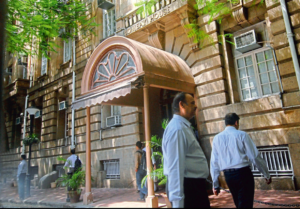
Tata Trusts publishes a registered office and an administrative office on its official contact page.
Registered Office
Tata Trusts
Bombay House, 24, Homi Mody Street,
Fort, Mumbai – 400001, India.
Telephone: +91 22 6665 8282
Email: talktous@tatatrusts.org
Official contact page: https://www.tatatrusts.org/our-work/contactus
Administrative Office
Tata Trusts
26th Floor, Centre 1, World Trade Centre,
Cuffe Parade, Mumbai – 400005, India.
Telephone: +91 22 6135 8282
Email: talktous@tatatrusts.org
Official contact page: https://www.tatatrusts.org/our-work/contactus
These are the addresses published by Tata Trusts. They should not be confused with the separate registered office of Tata Sons or the locations of individual hospitals, universities and programme partners.
The details should be rechecked on the official website before sending documents, payments or formal applications.
6. Tata Trusts and Tata Sons: Ownership Explained
Understanding the relationship between Tata Trusts and Tata Sons is essential to understanding the wider Tata Group.
What Is Tata Sons?
Tata Sons Private Limited is the principal investment holding company and promoter of Tata companies.
It occupies an important position in the corporate structure of the Tata Group. The operating businesses themselves are separate companies with their own management and boards.
Official reference: https://www.tata.com/business/tata-sons
How Much of Tata Sons Do Philanthropic Trusts Own?
Tata’s official corporate website states that approximately 66% of the equity share capital of Tata Sons is held collectively by philanthropic trusts.
The official description associates these holdings with philanthropic purposes, including education, health, livelihoods, art and culture.
This is an equity-shareholding figure. It should not automatically be treated as an independently verified percentage of every other measure, such as voting rights under every possible voting arrangement.
Nor should it be interpreted as the percentage of each Tata operating company directly owned by Tata Trusts.
The Ownership Structure in Simple Terms
Philanthropic trusts hold shares in Tata Sons.
Tata Sons acts as the principal holding company and promoter of Tata companies.
Tata Group companies operate through their own corporate structures, boards and business arrangements.
This is a simplified explanation, not a complete shareholder register. It does not represent every shareholder, subsidiary, joint venture or intermediate holding structure.
How Does the Ownership Benefit Philanthropy?
Tata’s official corporate and community information states that dividends associated with the trusts’ Tata Sons shareholding support philanthropic work.
However, several distinctions remain important:
- A dividend is a distribution made to a shareholder, not the same thing as the total revenue of Tata Group companies.
- A company’s revenue is not automatically available for charitable expenditure.
- The dividend received by a particular trust depends on its actual shareholding and the relevant distribution.
- The charitable expenditure of each trust must be determined from its own financial records.
- Ownership of Tata Sons does not make Tata Trusts the direct owner or operator of every Tata Group company.
Why Corporate Governance Matters
The relationship between charitable ownership and commercial governance became especially visible during 2026.
Tata Trusts publicly challenged aspects of the process concerning Tata Sons chairman N. Chandrasekaran’s future tenure. Other trustees also raised questions about the trusts’ role in Tata Sons’ commercial affairs.
These are governance matters involving different parties and positions. They should be assessed using the relevant primary documents and regulator records.
For the wider corporate context, read the existing 2 NICE LIFE guide:
The Complete Tata Sons and Tata Group Business Empire

This article provides a broader overview of Tata Sons, major Tata companies and the group’s business structure.
7. Education and Scholarship Initiatives

Education has been a central element of Tata philanthropy since the establishment of the J. N. Tata Endowment in 1892.
Tata Trusts’ present education portfolio includes support for access to education, foundational learning, teacher development, educational resources and improvements in the wider education system.
Official reference: https://www.tatatrusts.org/our-work/education
Higher Education and Scholarships
The J. N. Tata Endowment provides a historical connection between early philanthropic giving and higher education.
Students interested in applying should consult the official Endowment website for current eligibility, application procedures, deadlines, selection criteria and financial arrangements.
Official website: https://jntataendowment.org/
The existence of a scholarship programme does not mean that every student is eligible or that applications are continuously open.
School Education and Learning Outcomes
Tata Trusts’ official education portfolio describes work in areas including:
- Improving access to quality education.
- Strengthening foundational literacy and numeracy.
- Supporting teachers and educators.
- Developing teaching and learning resources.
- Supporting libraries and reading programmes.
- Working with public education systems and other partners.
- Encouraging community participation in school development.
Its published initiatives include Parag, teacher-development activities and school-improvement programmes.
These initiatives illustrate the distinction between building a school and improving the educational experience delivered by a school. The latter may require teacher support, appropriate learning materials, assessment systems and community engagement.
Published Education Portfolio Indicators
Tata Trusts’ official education page has published the following indicators:
| Indicator | Published figure |
|---|---|
| States | 10 |
| Districts | 31 |
| Students | 1,828,000 |
| Schools and anganwadis | 23,764 |
| Teachers | 31,990 |
Source: https://www.tatatrusts.org/our-work/education
These are figures presented on the education portfolio page, not independently verified estimates of all students who have ever benefited from Tata philanthropy. The precise reference period, definitions and overlap among programmes should be checked in the underlying annual report before using the numbers for year-on-year comparisons.
8. Healthcare, Hospitals and Medical Research
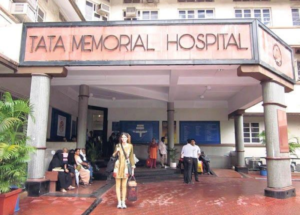
Healthcare is another major area of Tata philanthropy.
Tata Trusts identifies healthcare and nutrition among its principal areas of activity. Its wider philanthropic history includes support for cancer care, medical research and institutions intended to expand access to treatment and knowledge.
Tata Memorial Hospital and Tata Memorial Centre
Tata Memorial Hospital is one of the best-documented examples of the relationship between Tata philanthropy and major medical institutions.
The hospital was commissioned by the Sir Dorabji Tata Trust in 1941. Its subsequent history includes government involvement, transfer of administrative control and integration with the Cancer Research Institute to form Tata Memorial Centre in 1966.
Official history: https://mpmmcc.tmc.gov.in/about/history
This history shows how a philanthropic initiative can help establish an institution that later becomes part of a broader public healthcare system.
Current treatment services, appointment procedures, patient eligibility and financial assistance must be confirmed directly with Tata Memorial Centre.
Official website: https://tmc.gov.in/
Tata Medical Center, Kolkata
Tata Medical Center in Kolkata is another major institution associated with the wider Tata philanthropic and healthcare ecosystem.
Its current ownership, management, charitable funding arrangements and patient-support policies should be checked against the hospital’s own official records. Its name alone does not establish that it is operated directly by every trust grouped under Tata Trusts.
Official website: https://www.tatamedicalcenter.com/
Other Healthcare Priorities
Tata Trusts’ publicly described healthcare and nutrition work includes activities addressing:
- Access to healthcare.
- Community and rural health.
- Maternal and child health.
- Nutrition and malnutrition.
- Cancer care and related institutional development.
- Public-health capability.
- Healthcare systems and programme partnerships.
The precise programmes, geographies and delivery arrangements vary. The official programme directory is the appropriate starting point for reviewing current programme descriptions.
Official website: https://www.tatatrusts.org/our-work
A Note on Medical Assistance
Readers should not assume that contacting Tata Trusts automatically provides free hospital treatment or direct financial aid.
Hospital admission, subsidised treatment, patient assistance and charitable grants may follow different procedures. Contact the relevant hospital or named programme through its official website.
9. Rural Development, Livelihoods and Environmental Programmes

Tata Trusts’ publicly documented portfolio extends beyond education and healthcare to community development and livelihood-related activities.
Its official programme directory includes water and sanitation, livelihoods, skill development, environmental and energy initiatives, migration and urban habitat, and disaster relief and rehabilitation.
Official reference: https://www.tatatrusts.org/our-work
Water, Sanitation and Natural Resources
Water security can affect agriculture, health, education and household economic stability.
Relevant philanthropic activities may involve water conservation, sanitation, natural-resource management and community participation.
To assess a specific project, readers should identify its location, implementing partner, duration, funding and outcome measures.
A programme that has worked in a particular district should not be described as operating throughout India unless official records support that claim.
Agriculture and Rural Livelihoods
Rural development programmes may support farming communities, local livelihoods, producer organizations, skills and enterprise development.
However, increased income, productivity or employment should not be claimed without programme-specific data. A grant announcement establishes a commitment or activity, not necessarily a measured outcome.
Tribal and Underserved Communities
Tata Trusts states that its work places emphasis on underserved, underprivileged, tribal and other marginalized communities, with attention to women and children.
This broad orientation does not establish that every programme reaches all such communities. The actual beneficiary groups and geographic coverage should be taken from the documentation of each initiative.
Environment and Sustainability
The environmental portfolio includes work associated with energy, water and natural-resource challenges.
To evaluate environmental impact, useful measures may include changes in water availability, land restoration, adoption of sustainable agricultural practices, biodiversity indicators or resilience to climate-related risks.
These measures must be reported with a clear baseline, location and measurement period. General descriptions of environmental work are not sufficient to establish quantified climate or biodiversity outcomes.
10. Major Institutions Associated with Tata Philanthropy

The following directory identifies several major institutions with documented historical links to Tata philanthropy.
The critical distinction is between an institution founded with philanthropic support, one that received grants, and one currently managed by a particular trust. Those relationships are not interchangeable.
| Institution | Location | Establishment | Relationship and qualification |
|---|---|---|---|
| Indian Institute of Science | Bengaluru, Karnataka | Began operating in 1909 | Tata philanthropy played a foundational role in its development alongside other contributors and government support |
| Tata Institute of Social Sciences | Mumbai, Maharashtra | 1936 | Established as the Sir Dorabji Tata Graduate School of Social Work |
| Tata Institute of Fundamental Research | Mumbai, Maharashtra | 1945 | Developed with support associated with J. R. D. Tata and Tata philanthropic resources |
| Tata Memorial Hospital | Mumbai, Maharashtra | 1941 | Commissioned by the Sir Dorabji Tata Trust; later became part of Tata Memorial Centre under public-sector administration |
| Tata Memorial Centre | Mumbai, Maharashtra | 1966 for the combined centre | Combines Tata Memorial Hospital and the Cancer Research Institute under the documented institutional arrangement |
| Tata Medical Center | Kolkata, West Bengal | Opened in 2011 | A major cancer-care institution associated with the wider Tata philanthropic ecosystem; current management should be verified through its own records |
| National Institute of Advanced Studies | Bengaluru, Karnataka | 1988 | Listed by Tata Trusts among institutions it has supported |
| Tata Centre for Technology and Design, IIT Bombay | Mumbai, Maharashtra | Programme-specific | Identified by Tata Trusts among institutions seeded or supported through philanthropic initiatives |
| Tata Centre for Technology and Design, MIT | Cambridge, Massachusetts, USA | Programme-specific | International research collaboration described by Tata Trusts |
| Tata Centre for Genetics and Society, UC San Diego | California, USA | Programme-specific | Identified in Tata Trusts’ institutional portfolio |
Sources:
- Tata Trusts institutional portfolio: https://www.tatatrusts.org/our-work/institutions
- Tata Trusts overview: https://www.tatatrusts.org/about-tatatrusts
- Tata Memorial Centre history: https://mpmmcc.tmc.gov.in/about/history
Institutional Websites
- Indian Institute of Science: https://iisc.ac.in/
- Tata Institute of Social Sciences: https://www.tiss.edu/
- Tata Institute of Fundamental Research: https://www.tifr.res.in/
- Tata Memorial Centre: https://tmc.gov.in/
- Tata Medical Center: https://www.tatamedicalcenter.com/
- National Institute of Advanced Studies: https://nias.res.in/
- Tata Trusts institutional portfolio: https://www.tatatrusts.org/our-work/institutions
What About Orphanages and Other Charitable Institutions?
A reliable directory should not classify every charity, hospital, school or institution bearing the Tata name as directly owned by Tata Trusts.
The sources reviewed do not establish a complete list of orphanages directly operated by the collective Tata Trusts organization. No claim is made here that Tata Trusts directly operates a nationwide network of orphanages.
Readers seeking a specific institution should verify its legal name, managing organization, funding relationships and current status through official records.
11. Financial Information and Transparency

Tata Trusts publishes an Annual Reports and Financial Declaration page.
Official website: https://tatatrusts.org/about-tatatrusts/annualreports
The page lists annual reports and financial declarations, including material relating to foreign contributions. Readers should consult the relevant report for the financial year they wish to examine.
What Financial Information Should Readers Examine?
| Financial category | Meaning |
|---|---|
| Donations and contributions | Money received from donors or other contributors |
| Investment income | Returns generated from investments, where applicable |
| Dividends | Distributions received on shares held by a trust |
| Approved grants | Funding authorized for a purpose |
| Disbursed grants | Money actually transferred to a recipient |
| Programme expenditure | Expenditure classified as related to programme delivery |
| Administrative expenditure | Expenditure for governance and organizational operations |
| Assets and liabilities | Financial position at the reporting date |
These categories are not interchangeable. A grant commitment is not proof of a full disbursement, and a disbursement does not by itself prove that the intended social outcome was achieved.
Where Can Annual Reports Be Found?
The official annual-report page is the preferred source:
https://tatatrusts.org/about-tatatrusts/annualreports
The financial year must always be specified when quoting expenditure, assets, liabilities, grants or other financial figures.
Why No Single Net-Worth Figure Is Presented
The sources reviewed do not establish one consolidated, independently audited net-worth figure that accurately represents all entities associated with Tata Trusts.
The value of Tata Sons, the market value of Tata Group companies, the assets of an individual trust and the total philanthropic expenditure of a particular year are different financial concepts.
It would therefore be misleading to describe the market capitalization or revenue of Tata Group companies as the net worth of Tata Trusts.
12. Measuring Tata Trusts’ Social Impact
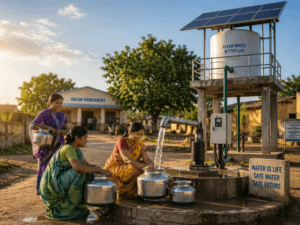
Philanthropy should be evaluated by examining both what an organization does and what changes as a result.
Tata Trusts’ annual-report material emphasizes the importance of measuring meaningful changes rather than relying only on money spent or the number of people reached.
A rigorous evaluation distinguishes the following stages:
- Financial commitment: Money promised or approved.
- Disbursement: Money transferred to a programme or recipient.
- Activities: Services delivered, facilities established or training conducted.
- Reach: Individuals or institutions that participated or received services.
- Outcomes: Measurable changes in learning, health, income, access or other indicators.
- Long-term impact: Durable changes supported by appropriate evaluation methods.
Examples of Appropriate Impact Measures
| Area | Potential measures |
|---|---|
| Education | Attendance, retention, foundational literacy, numeracy and learning gains |
| Healthcare | Treatment access, waiting times, clinical outcomes and patient support |
| Nutrition | Changes in nutritional indicators using appropriate measurement methods |
| Rural livelihoods | Household income, productivity and livelihood diversification |
| Water and sanitation | Reliable access to safe water and sanitation facilities |
| Skills | Completion, job placement, retention and earnings |
| Environment | Water availability, land restoration and relevant ecological indicators |
| Research | Publications, research capability, scientific discoveries and practical applications |
These are evaluation measures, not claims that every Tata Trusts programme has demonstrated all these outcomes.
Limitations of Social-Impact Data
A hospital may receive support from several donors, public agencies and research organizations. A university may have multiple funding sources. A rural programme may depend on government departments and local partners.
Consequently, the full impact of an institution cannot automatically be attributed to one philanthropic trust.
Likewise, a beneficiary count may include individuals who participated in multiple activities. Without a clear methodology, adding figures across programmes can result in double counting.
A complete impact assessment should identify the original data source, reporting period, geographic scope, definition of a beneficiary and any independent evaluation.
13. Governance Controversies and Developments in 2026

Tata Trusts’ role as a major shareholder in Tata Sons has brought its governance arrangements into public discussion.
Disagreement Over Tata Sons Leadership
In September 2026, Tata Trusts publicly argued that the decision of Tata Sons chairman N. Chandrasekaran not to offer himself for reappointment at the end of his existing tenure had been accepted and should be treated as final.
This statement represents Tata Trusts’ publicly stated position. It should not be presented as a final judicial or regulatory determination of every issue surrounding the appointment process.
Official updates: https://www.tatatrusts.org/media/press-releases
Concerns Raised by Trustees
Reuters reported in September 2026 that Venu Srinivasan had asked Maharashtra’s charity regulator to investigate alleged governance lapses and the philanthropic trusts’ involvement in Tata Sons’ commercial affairs.
The report described a dispute about the boundary between charitable trusteeship and participation in decisions involving the holding company. It did not establish that the alleged breaches had been proven.
Independent report: https://www.reuters.com/world/india/member-indias-tata-trusts-seeks-governance-probe-rift-deepens-2026-09-30/
How Should Readers Interpret These Developments?
A careful account distinguishes:
- Official statements made by Tata Trusts.
- Statements or complaints attributed to individual trustees.
- Reporting by independent news organizations.
- Findings issued by a competent regulator or court.
- Final legal outcomes, if any.
These categories must not be treated as equivalent.
As of the research cutoff of October 25, 2026, the sources reviewed establish that significant governance disagreements were publicly reported. They do not, by themselves, establish a final determination resolving every allegation.
Readers should consult the latest official press releases and regulatory records for subsequent developments.
14. How to Apply for Support or Collaborate with Tata Trusts

The appropriate application route depends on the kind of support being sought.
Students Seeking Scholarships
Students interested in the J. N. Tata Endowment should visit its official website:
Eligibility, application windows, selection criteria and financial terms should be checked directly with the Endowment. Do not rely on an unofficial social-media post as evidence that a scholarship is open.
Nonprofits Seeking Grants
Organizations should begin with the official Tata Trusts website and review the relevant programme area.
Website: https://www.tatatrusts.org/
A prospective applicant should identify:
- The trust or programme relevant to the proposed work.
- The geographic area and intended beneficiaries.
- The organization’s legal status and governance.
- The evidence supporting the proposed intervention.
- The proposed budget and funding requirement.
- The intended outcomes and reporting arrangements.
- Any publicly stated eligibility criteria or application process.
The information reviewed here does not establish a universal open-grant application process covering every trust and programme. The existence of a philanthropic organization does not guarantee that it accepts unsolicited proposals.
Individuals Seeking Medical or Financial Assistance
Individuals should contact the relevant hospital, institution or named programme through its official channels.
Eligibility may depend on the institution’s own policies, available funds, documentation and other criteria. A general Tata Trusts contact address should not be interpreted as a guarantee of direct assistance.
Organizations Seeking Partnerships
Research institutions, nonprofits and public agencies should examine the official programme descriptions and partnership announcements to identify the relevant team and documented requirements.
Official contact page: https://www.tatatrusts.org/our-work/contactus
Avoid Fraudulent Grant Offers
Be cautious of any person or website claiming that Tata Trusts has guaranteed you a grant, scholarship or medical payment in exchange for a processing fee.
Before sharing personal documents or transferring money:
- Verify the website domain.
- Check the relevant programme on the official website.
- Confirm contact details through the official organization.
- Do not treat an unofficial email, WhatsApp message or social-media account as proof of authorization.
- Do not assume that the Tata name on a document proves its authenticity.
15. Frequently Asked Questions About Tata Trusts

1. What are Tata Trusts?
Tata Trusts is the collective name used for a group of philanthropic trusts associated with the Tata family and the wider Tata Group. They support charitable and social-development activities.
2. When did Tata Trusts begin?
The roots of Tata philanthropy are traced to 1892, when Jamsetji Tata established the J. N. Tata Endowment for higher education. Not every individual trust was established in 1892.
3. Who founded Tata philanthropy?
Jamsetji Nusserwanji Tata is the foundational figure associated with organized Tata philanthropy. Subsequent generations, including Sir Dorabji Tata and Sir Ratan Tata, developed the charitable legacy further.
4. Who is the current chairman of Tata Trusts?
The official trustee pages reviewed identify Noel N. Tata as Chairman of Tata Trusts. Individual trusts have their own governing arrangements.
5. Who are the trustees of Tata Trusts?
Trustees vary by trust. The official trustee directory lists trustees under the Sir Dorabji Tata Trust and allied trusts and the Sir Ratan Tata Trust and allied trusts.
Website: https://www.tatatrusts.org/about-tatatrusts/board-of-trustees
6. How many trusts are associated with Tata Trusts?
Multiple trusts are associated with the Tata philanthropic network. The total depends on whether one counts constituent trusts, affiliated entities, implementation organizations or supported institutions. These categories should not be combined into one number.
7. What is the difference between Tata Trusts and an individual Tata charitable trust?
Tata Trusts is the collective name used for a philanthropic network. An individual trust is a distinct legal arrangement with its own governing instrument, trustees and charitable responsibilities.
8. Where is the Tata Trusts headquarters?
Tata Trusts publishes its registered office at Bombay House, 24, Homi Mody Street, Fort, Mumbai 400001, and its administrative office at Centre 1, World Trade Centre, Cuffe Parade, Mumbai 400005.
9. What is the official Tata Trusts website?
The official website is https://www.tatatrusts.org/.
10. How much of Tata Sons do philanthropic trusts own?
Tata’s official corporate website states that philanthropic trusts collectively hold approximately 66% of Tata Sons’ equity share capital.
11. Does Tata Trusts own all Tata companies?
No. The 66% figure concerns equity in Tata Sons. Tata companies have their own corporate structures, shareholders and boards.
12. What is Tata Sons?
Tata Sons Private Limited is the principal investment holding company and promoter of Tata companies.
13. How does Tata Trusts receive funding?
Philanthropic resources may include dividends, donations, investment income and other receipts, depending on the individual trust and its financial arrangements. Exact amounts must be verified from its financial statements.
14. How are Tata Sons dividends connected to philanthropy?
Tata’s official community information states that dividends flowing to philanthropic trusts support their charitable work. The actual amount received by each trust depends on its shareholding and the relevant distributions.
15. Does Tata Trusts operate hospitals?
The trusts have supported major healthcare institutions, but not every institution associated with Tata philanthropy is operated directly by Tata Trusts. The governing and operating organization must be verified for each hospital.
16. Which hospitals are associated with Tata philanthropy?
Tata Memorial Hospital and Tata Memorial Centre have documented historical links to the Sir Dorabji Tata Trust. Tata Medical Center in Kolkata is another major institution associated with the wider Tata philanthropic ecosystem.
17. Does Tata Trusts support cancer treatment?
Cancer care and medical research are important parts of the wider Tata philanthropic and institutional history. Treatment access and patient assistance must be confirmed through the relevant hospital’s official policies.
18. Which colleges and universities have received Tata philanthropic support?
Examples include the Indian Institute of Science, Tata Institute of Social Sciences, Tata Institute of Fundamental Research and other institutions identified in the official Tata Trusts institutional portfolio. The exact relationship differs by institution.
19. Does Tata Trusts run orphanages?
The sources reviewed do not establish a complete list of orphanages directly operated by Tata Trusts. Do not assume an orphanage is managed by Tata Trusts merely because it uses the Tata name or receives a donation from a Tata-associated organization.
20. Does Tata Trusts provide scholarships?
The J. N. Tata Endowment is an established higher-education initiative. Applicants should consult its official website for current eligibility, selection criteria and deadlines.
21. Can an individual apply for financial assistance?
Potential assistance depends on the specific trust, institution or programme. The sources reviewed do not establish a universal individual-assistance scheme covering all needs.
22. How can an NGO approach Tata Trusts?
An NGO should identify the relevant programme, review its official guidelines, establish its legal and operational eligibility, and use the official contact channels. A grant should never be assumed to be guaranteed.
23. Does Tata Trusts accept unsolicited grant applications?
A universal open application process for all trusts and programmes is not established by the sources reviewed. Applicants should check the requirements of the specific programme.
24. Does Tata Trusts support rural development?
Yes. Rural livelihoods and community development are among the areas covered by the wider philanthropic portfolio. Specific projects and their current locations should be verified from official programme records.
25. What are Tata Trusts’ main education initiatives?
Its public education portfolio includes school improvement, foundational learning, teacher development, libraries, learning resources and partnerships to strengthen education systems.
26. What are Tata Trusts’ major healthcare priorities?
Healthcare, nutrition, medical institutions and public-health-related activities feature in the official programme portfolio. The exact scope varies across programmes.
27. Does Tata Trusts work on water and sanitation?
Water, sanitation and hygiene are included in its publicly described work areas.
28. Does Tata Trusts support environmental projects?
Environmental and energy-related work forms part of its broader portfolio. Specific environmental outcomes should be evaluated using project-level data.
29. Where can I find Tata Trusts annual reports?
Use the official Annual Reports and Financial Declarations page:
https://tatatrusts.org/about-tatatrusts/annualreports
30. How can I contact Tata Trusts?
The official contact page publishes the registered office, administrative office, telephone numbers and email address.
Website: https://www.tatatrusts.org/our-work/contactus
31. How can I verify a Tata Trusts grant offer?
Check the official website and confirm the programme and contact details. Be suspicious of demands for upfront processing fees, unofficial email addresses and guaranteed grant promises.
32. What is the difference between Tata Trusts and Tata Group CSR?
Tata Trusts are philanthropic trusts, while corporate social responsibility initiatives may be undertaken by individual companies under the applicable legal framework. The funding, governance and reporting arrangements can differ.
33. Are all Tata-associated institutions owned by Tata Trusts?
No. Some institutions were established with philanthropic support, some received grants, and others may have independent governance. Their names alone do not establish ownership.
34. What happened in Tata Trusts governance during 2026?
Public disagreements emerged concerning Tata Sons leadership and the role of trustees in commercial matters. Reports of complaints and allegations should be distinguished from any final regulatory or judicial finding.
35. Where can I find Tata Trusts programmes in my state?
Start with the official Our Work directory and the relevant programme pages. A complete, current state-wise register was not established in the sources reviewed for this article.
Website: https://www.tatatrusts.org/our-work
36. Can I volunteer with Tata Trusts?
Volunteer opportunities depend on the specific organization or programme. Check official announcements rather than assuming that a general volunteering application is available.
37. How is Tata Trusts different from Tata Sons?
Tata Trusts is a philanthropic network. Tata Sons is the principal holding company and promoter of Tata companies. Their purposes, legal structures and governance responsibilities differ.
38. Does Tata Trusts publish financial information?
Yes. Tata Trusts maintains an official annual-report and financial-declaration page. The information available varies by reporting year and individual trust.
39. Can the entire impact of Tata Memorial Centre be attributed to Tata Trusts?
No. The institution’s history includes philanthropic origins and later government involvement. Its total achievements cannot automatically be attributed exclusively to one trust.
40. Is 2 NICE LIFE affiliated with Tata Trusts?
No affiliation or endorsement is implied. This article is an independent educational guide published for readers of 2 NICE LIFE — Your Growth Partner.
16. Sources and References
Official Tata Trusts Sources
- About Tata Trusts: https://www.tatatrusts.org/about-tatatrusts
- The Tata Trusts Story: https://www.tatatrusts.org/about-tatatrusts/the-tata-trusts-story
- Sir Dorabji Tata Trust and allied trusts: https://www.tatatrusts.org/about-tatatrusts/sdtt-board-of-trustees
- Sir Ratan Tata Trust and allied trusts: https://www.tatatrusts.org/about-tatatrusts/srtt-board-of-trustees
- Annual Reports and Financial Declarations: https://tatatrusts.org/about-tatatrusts/annualreports
- Tata Trusts — Our Work: https://www.tatatrusts.org/our-work
- Education: https://www.tatatrusts.org/our-work/education
- Strengthening Institutions for Change: https://www.tatatrusts.org/our-work/institutions
- Contact Us: https://www.tatatrusts.org/our-work/contactus
- Press Releases: https://www.tatatrusts.org/media/press-releases
Official Tata Group Sources
- Tata Sons: https://www.tata.com/business/tata-sons
- About Tata Group: https://www.tata.com/about
- Tata Group Business Overview: https://www.tata.com/business/overview
- Tata and the Community: https://www.tata.com/csr
Institutional Sources
- Indian Institute of Science: https://iisc.ac.in/
- Tata Institute of Social Sciences: https://www.tiss.edu/
- Tata Institute of Fundamental Research: https://www.tifr.res.in/
- Tata Memorial Centre: https://tmc.gov.in/
- Tata Memorial Centre History: https://mpmmcc.tmc.gov.in/about/history
- Tata Medical Center: https://www.tatamedicalcenter.com/
- National Institute of Advanced Studies: https://nias.res.in/
- J. N. Tata Endowment: https://jntataendowment.org/
Independent Reporting
- Reuters — September 30, 2026, Tata Trusts Governance Dispute: https://www.reuters.com/world/india/member-indias-tata-trusts-seeks-governance-probe-rift-deepens-2026-09-30/
Grow Your Business with 2 NICE LIFE

Every successful organisation demonstrates the importance of strategic thinking, building trust, and creating long-term value.
At 2 NICE LIFE — Your Growth Partner, we help businesses grow through digital marketing strategy, SEO, content marketing, website development, paid advertising, and lead generation.
Whether you run a startup or an established business, we can help you explore the right digital growth opportunities.
Ready to grow your business? Visit 2 NICE LIFE to explore our services and discuss your digital marketing needs.
2 NICE LIFE — Your Growth Partner.