
Reliance Jio transformed India’s telecom landscape after entering the commercial market in 2016 with free introductory services, affordable data and an ambitious connectivity proposition. Its entry challenged established operators and changed consumer expectations about mobile internet access, data consumption and value for money.
Over the following decade, Jio expanded its positioning beyond affordable connectivity into 4G, 5G, home broadband, digital services and technology-led business opportunities.
The Jio marketing strategy is an important business case study because it demonstrates how pricing, customer acquisition, distribution, brand positioning, technology and customer experience can work together to build a large-scale business.
However, Jio’s growth cannot be attributed to advertising alone. Network investment, spectrum, distribution, capital, market conditions, smartphone adoption and competitive responses also contributed to its development.
In 2026, the company’s story includes another important dimension: Jio Platforms’ proposed initial public offering (IPO). Consumer marketing and investor communication have different objectives, audiences and regulatory requirements, making the IPO an important subject for business and marketing analysis.
This article examines Jio’s marketing strategy from 2016 through October 2026, explores its competitive positioning and digital ecosystem, analyzes its IPO communication, and identifies practical lessons for entrepreneurs, startups and small businesses.
1. What Is Reliance Jio? Understanding the Business Behind the Brand

Reliance Jio is one of India’s major telecommunications and digital-services businesses. Its growth has been closely associated with the expansion of mobile internet access and the development of digital services.
Understanding the corporate structure is important because three related entities are frequently confused.
Reliance Industries Limited (RIL) is the diversified parent company with businesses across several sectors, including energy, retail and digital services.
Jio Platforms Limited (JPL) is the digital and technology holding company associated with Jio’s connectivity platforms and broader digital ecosystem. It is also the company associated with the IPO discussed in this article.
Reliance Jio Infocomm Limited (RJIL) is the telecommunications operating company behind Jio’s mobile connectivity services and related telecom operations.
These entities are connected but are not interchangeable.
Jio initially built its market proposition around mobile connectivity. Over time, the broader business expanded into 5G, home broadband, digital applications, enterprise solutions and technology-related opportunities.
This evolution is strategically significant. A company that begins with a core service can create additional opportunities by offering complementary products that address related customer needs.
For example, mobile connectivity can support entertainment, digital communication, online education, business applications and other internet-based activities.
The broader lesson is that a strong core product can provide the foundation for a larger ecosystem, provided the additional services create genuine customer value.
2. The Indian Telecom Market Before Jio
Before Jio’s commercial launch, India already had an established telecommunications industry with several operators, extensive mobile distribution networks and a growing smartphone market.
However, the affordability and availability of mobile data remained important considerations for many consumers.
High data costs relative to some customers’ budgets could limit how frequently they streamed videos, downloaded applications or used other data-intensive services.
Several market conditions created an opportunity for Jio:
- Growing smartphone adoption increased the potential demand for mobile internet.
- Consumers wanted more affordable data and greater value from their mobile spending.
- Social media, messaging, streaming and digital services were creating new reasons to use the internet.
- India’s large population offered opportunities for businesses capable of achieving scale.
- Existing pricing structures created room for a new entrant to differentiate itself.
Jio entered this environment with a proposition that made affordability and access central to its brand.
Its impact was significant, but India’s digital transformation was not the result of one company alone. Smartphone manufacturers, government initiatives, competing telecom operators, app developers and changing consumer behaviour also played important roles.
3. Jio Marketing Strategy Timeline: 2016–2026

2016–2017: Launch, Free Offers and Rapid Adoption
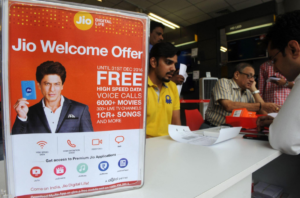
Jio’s commercial launch in September 2016 introduced a highly visible value proposition built around free introductory services and affordable mobile data.
The welcome offer initially provided eligible customers with promotional services without charge through the end of 2016. Promotional terms subsequently changed, and additional offers extended the introductory period.
The strategy reduced the financial risk of trying a new telecom service.
Customers did not have to rely exclusively on advertising claims. They could experience the service and assess its usefulness directly.
The approach also generated substantial public attention and intensified competition in the telecom market.
From a marketing perspective, the launch combined penetration pricing, trial-based acquisition, brand awareness and an easily communicated customer benefit.
The commercial objective was broader than simply distributing SIM cards. A large user base could create opportunities for paid-plan conversion, recurring revenue and future digital services.
Marketing lesson: Reduce the barriers to trying a product when customers can experience its value directly. However, introductory offers must support a sustainable business model rather than become a permanent substitute for profitability.
2017–2019: Paid Conversion and Market Expansion
After the initial promotional period, Jio needed to convert customer adoption into a sustainable commercial relationship.
Telecom networks require continuous investment in infrastructure, equipment, spectrum, maintenance and customer support. Free services alone cannot fund these requirements indefinitely.
Competitive tariffs and continued service availability helped Jio maintain its value proposition as customers moved toward paid plans.
This phase illustrates the difference between acquiring customers and generating profitable revenue.
A business can attract a large number of users but still struggle if customers do not convert to paid plans, purchase repeatedly or remain active.
Marketing lesson: Measure the entire customer journey, from initial interest to paid conversion and retention. Customer acquisition is a starting point, not the final objective.
2019–2021: Digital Services and Ecosystem Development
Jio’s strategic direction increasingly included digital platforms, technology and partnerships.
Jio Platforms became a significant part of this broader business structure, while relationships with companies such as Meta and Google demonstrated the importance of technology collaboration and ecosystem development.
Partnerships can help companies access expertise, develop products, improve distribution and explore new commercial opportunities.
However, each partnership must be evaluated according to its actual purpose and scope. An investment or technology agreement does not automatically mean that a partner directly promotes a company’s consumer services.
Marketing lesson: Complementary products can increase the usefulness of a core service. Businesses should expand around customer needs rather than add products simply to create a larger catalogue.
2021–2023: Digital Access and 5G Positioning
JioPhone Next, developed in partnership with Google, represented an effort to address smartphone accessibility and digital adoption.
At the same time, the transition toward 5G created new opportunities for technology-led positioning.
Faster connectivity, lower latency and additional network capabilities could support use cases such as video streaming, gaming, communication and business applications.
However, a technology claim only becomes a convincing marketing benefit when customers can access and experience it.
Coverage, device compatibility, network conditions and affordability remain important considerations.
Marketing lesson: Explain what a technology enables instead of relying only on technical specifications.
2023–2025: 5G Adoption, Broadband and Monetization
As 5G expanded, Jio’s proposition increasingly included use cases beyond basic mobile connectivity.
Home broadband offerings such as JioFiber and JioAirFiber also broadened the company’s addressable market.
These services address related but different connectivity needs. Availability, installation requirements, plan terms and included benefits vary by product and location.
Bundling can help customers evaluate several complementary benefits together, but businesses must communicate the exact terms clearly.
Marketing lesson: Create complementary services that make the core offering more useful, while keeping pricing and product choices understandable.
2026: Digital Expansion and IPO Communication
By October 2026, Jio Platforms’ business narrative included connectivity, 5G, digital services, technology and future growth opportunities.
The company’s IPO introduced a different audience: prospective investors.
Investor communication requires financial information, corporate disclosures, risk factors and an explanation of the business model. It is not the same as promoting a consumer mobile plan.
Marketing lesson: Adapt the message to the audience. Customers need to understand a product’s value, while investors need to evaluate financial performance, growth prospects, risks and valuation.
4. Jio’s Core Marketing Strategies Explained
4.1 Penetration Pricing and Affordable Connectivity
Penetration pricing means entering a market with a relatively low price to encourage adoption and build market presence.
Jio combined promotional launch offers with an affordable data proposition, challenging existing consumer expectations.
This strategy can create several advantages:
- Lower the financial barrier to adoption.
- Encourage customers to try a new product.
- Increase awareness through word-of-mouth.
- Attract customers from competing providers.
- Create opportunities for future paid services.
However, low pricing can also create risks.
Customers may become accustomed to low prices, making future price increases difficult. A company may also attract users who are highly price-sensitive and less likely to remain when promotions end.
For a small business, the lesson is not to compete indefinitely on price. Instead, make the offer attractive while maintaining sufficient margins to deliver the promised service.
4.2 Free Offers as a Customer Acquisition Strategy
Free offers can reduce uncertainty and encourage customers to experience a product before making a financial commitment.
Jio’s introductory offers demonstrate how trial can lower the psychological and financial barriers to adoption.
Once customers begin using a service regularly, it may become part of their daily routine. This can create an opportunity for paid conversion, although it does not guarantee that every user will become a long-term customer.
A practical customer journey is:
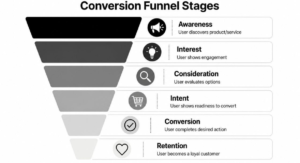
Awareness → Trial → Activation → Paid Conversion → Retention → Upselling
Businesses should measure conversion at each stage.
For example, a software company might offer a limited free trial. It should measure how many users activate the product, use its core features, convert to paid plans and continue renewing.
Key lesson: Free offers are most useful when they help customers experience genuine value and when the business has a clear path to sustainable revenue.
4.3 Disruptive Market Positioning
Jio challenged established customer expectations by offering an alternative approach to mobile data pricing and access.
Its proposition was relatively easy to understand: customers could obtain connectivity and data at an attractive price.
This clarity helped distinguish the brand in a crowded market.
For a small business, disruptive positioning does not necessarily require the lowest price. It can come from simpler processes, transparent pricing, faster delivery, specialization or a better customer experience.
For example, a consulting business could differentiate itself through a clearly defined service package, transparent fees and a structured delivery timeline.
The goal is to give customers a compelling reason to choose the business over alternatives.
4.4 Brand Awareness and Mass-Market Communication
Jio’s launch attracted substantial public attention. Its national ambitions made broad brand awareness important.
Brand salience refers to how readily customers remember a brand when a relevant need arises.
A consistent message can help customers connect a brand with a particular benefit.
Jio’s early proposition centred on affordable connectivity, while later communication also highlighted network technology and digital services.
However, brand visibility alone does not prove advertising effectiveness. A proper evaluation would require reliable campaign-level information, including spending, reach, frequency, brand recall and conversion data.
Small businesses can apply the same principle with fewer resources by maintaining consistent messaging across their website, social media, sales communication and advertising.
4.5 Distribution and Customer Onboarding
Marketing is not complete when a customer becomes interested. The customer must also be able to obtain, activate and use the product.
Jio’s growth depended on network infrastructure, SIM availability, retail access, customer onboarding and service operations.
These elements supported the promise made through marketing.
For a service business, distribution might include an accessible website, clear service descriptions, simple booking, convenient payment options and responsive customer support.
A complicated onboarding process can waste the money spent acquiring customers.
Businesses should identify where prospects abandon the journey and improve those points before increasing advertising expenditure.
4.6 Digital Marketing and Social Media
Digital channels allow companies to communicate product information, answer questions, publish updates and direct customers toward conversion points.
Jio’s official online presence supports customer communication around plans, network capabilities and services.
However, specific claims about undisclosed advertising budgets, influencer partnerships or campaign returns should not be made without credible evidence.
Small businesses can build a practical digital marketing system through:
- Search engine optimization.
- Educational blog content.
- Relevant social media communication.
- Targeted paid advertising.
- Conversion-focused landing pages.
- Lead tracking and follow-up.
The goal is to connect the right audience with the right offer and make the next step easy.
4.7 Bundling and Ecosystem Marketing
Bundling combines multiple products or benefits in one offer. An ecosystem strategy connects complementary products that customers may use together.
Jio’s broader business includes mobile connectivity, home broadband, digital services and enterprise-related offerings.
This creates opportunities to serve additional needs and develop cross-selling relationships.
However, not every customer needs every service, and the benefits included in individual plans can differ.
A smaller company can apply the principle by offering related services as optional additions.
For example, a website-development business might offer website maintenance, analytics setup and search optimization alongside its core development service.
The additional products should solve real customer problems rather than complicate the purchasing decision.
4.8 4G and 5G Technology Positioning
Technology can differentiate a business when customers understand its practical value.
Jio’s 5G communication highlights connectivity capabilities and potential use cases.
Actual network performance can vary depending on location, device compatibility, indoor conditions, congestion and plan eligibility.
Businesses should therefore avoid presenting technical capabilities as guaranteed outcomes for every customer.
The same principle applies outside telecom. A software company should explain how its product simplifies a workflow or saves time rather than relying exclusively on technical terminology.
4.9 Customer Retention and Monetization
Customer acquisition creates an initial relationship. Retention determines whether that relationship continues to generate value.
In telecom, customers may consider price, coverage, network performance, plan benefits and customer support when deciding whether to continue a service.
Useful performance metrics include:
- Average revenue per user (ARPU).
- Customer churn rate.
- Renewal and recharge rates.
- Customer acquisition cost (CAC).
- Customer lifetime value (CLV).
- Complaint resolution time.
- Revenue and contribution margin by segment.
Customer lifetime value estimates the economic value generated by a customer over the relationship. Customer acquisition cost measures the cost of obtaining that customer.
A sustainable business should evaluate whether customer value justifies acquisition and service costs.
A high customer count does not automatically prove that a company is profitable or that every customer relationship is valuable.
4.10 Partnerships and Strategic Development
Partnerships can support product development, technology access, distribution and credibility.
Jio’s relationships with Meta and Google demonstrate the role of strategic collaboration in the digital ecosystem.
For smaller businesses, partnerships can include complementary service providers, local industry groups or technology vendors.
The important question is whether the relationship creates measurable value for customers and whether responsibilities are clearly defined.
4.11 Personalization, Data and AI
Digital platforms can use analytics to understand service usage, identify problems and improve customer experiences. AI may support customer service, network management, recommendations and enterprise applications.
However, potential use cases should not be confused with verified commercial deployments or proven financial outcomes.
Responsible data use requires attention to consent, privacy, security and applicable laws.
Small businesses can start with basic analytics, customer feedback and consent-based lead tracking before investing in complex AI systems.
5. Jio’s Marketing Mix: The 7Ps Analysis
Product
Jio’s broader portfolio includes mobile connectivity, 5G, home broadband and digital services.
Business objective: Address different connectivity and digital needs.
Lesson: Develop products around real customer problems and expand only when complementary services add value.
Price
Jio’s early promotional offers and competitive tariffs formed an important part of its market positioning.
Business objective: Reduce adoption barriers and make the value proposition attractive.
Lesson: Pricing should support customer acquisition without undermining long-term profitability.
Place
Network infrastructure, retail access and digital channels support product availability.
Business objective: Make services accessible to the intended audience.
Lesson: Improve distribution and remove unnecessary friction from the purchasing process.
Promotion
Brand communication and technology information help explain Jio’s services.
Business objective: Build awareness and communicate customer benefits.
Lesson: Use a consistent, understandable message across relevant channels.
People
Retail partners, customer-service teams, field personnel and technical teams influence the service experience.
Business objective: Support customers before and after purchase.
Lesson: Train customer-facing teams to deliver the promise made through marketing.
Process
Activation, recharge, service provisioning and support processes influence convenience.
Business objective: Make access and continued usage easier.
Lesson: Simplify every stage of the customer journey.
Physical Evidence
Network information, retail environments, devices and digital interfaces help customers evaluate the service.
Business objective: Make the offering tangible and credible.
Lesson: Provide clear evidence that supports customer trust.
The 7Ps framework is an analytical tool. It should not be interpreted as proof that every internal marketing process is publicly documented.
6. STP Analysis: Segmentation, Targeting and Positioning
Segmentation
Jio can be analyzed through customer groups based on affordability, geography, data usage and connectivity requirements.
Potential segments include:
- Price-sensitive prepaid customers.
- High-data smartphone users.
- Customers requiring 5G connectivity.
- Households seeking broadband.
- Users with entertainment and digital-service needs.
- Businesses requiring connectivity and technology solutions.
These are analytical categories, not a statement of Jio’s exact internal segmentation model.
Targeting
Different products address different customer needs.
Prepaid plans may appeal to customers prioritizing affordability. Broadband products serve households that need regular home connectivity. Enterprise solutions address business requirements such as scale, reliability, security and support.
Positioning
Jio’s positioning has evolved from affordable connectivity toward a broader proposition involving network capability and digital services.
A useful positioning statement answers three questions:
- Who is the product for?
- What important problem does it solve?
- Why should customers choose it over alternatives?
Small businesses should answer these questions before spending heavily on marketing.
7. Jio’s Customer Acquisition Funnel
The following framework helps explain the customer journey. It is not a claim that Jio uses this exact internal model.
Stage 1: Awareness
Customers discover the brand through communication, public visibility or recommendations.
Possible metrics include reach, impressions and branded searches.
Stage 2: Interest
Customers investigate plans, features and benefits.
Possible metrics include product-page visits, inquiries and engagement.
Stage 3: Trial or Initial Adoption
Customers try the service or activate an offer.
Possible metrics include activations, trial usage and activation cost.
Stage 4: Paid Conversion
Customers move to commercial plans.
Possible metrics include trial-to-paid conversion and revenue per customer.
Stage 5: Retention
Customers continue using the service.
Possible metrics include churn, renewals and customer satisfaction.
Stage 6: Upselling
Customers move to more suitable or higher-value plans.
Possible metrics include upgrade rates and ARPU.
Stage 7: Cross-Selling
Customers adopt complementary services.
Possible metrics include broadband adoption or the proportion of customers using multiple products.
Stage 8: Advocacy
Satisfied customers recommend the service.
Possible metrics include referrals, customer feedback and satisfaction scores.
The key lesson is to measure progress between stages. High traffic or a large user base does not automatically translate into profitable sales.
8. Jio vs Airtel, Vodafone Idea and Other Competitors

India’s telecom market includes competitors with different network capabilities, products, distribution and customer-service approaches.
| Dimension | Jio | Airtel | Vodafone Idea |
|---|---|---|---|
| Core proposition | Connectivity scale, affordable access and digital ecosystem | Connectivity, network experience and converged digital services | Mobile connectivity and network-development initiatives |
| 5G positioning | True 5G services and network expansion | 5G services and network expansion | 5G deployment and expansion in selected markets |
| Broadband | JioFiber and JioAirFiber | Airtel Xstream Fiber and AirFiber | Primarily mobile-focused in this comparison |
| Customer experience | Depends on local coverage, plan and service conditions | Depends on local coverage, plan and service conditions | Depends on local coverage, plan and service conditions |
| Strategic lesson | Combine a clear value proposition with complementary services | Differentiate beyond price alone | Compete through relevant offers, service and network investment |
This is a qualitative comparison, not a universal ranking. Network quality and value depend on location, device, tariff, customer needs and reporting period.
For reliable market data, consult the Telecom Regulatory Authority of India’s telecom subscription reports and compare operators using consistent dates and definitions.
The broader business lesson is that acquisition, service quality, pricing discipline and retention must work together. A competitor’s response can quickly reduce the advantage of a single pricing or promotional tactic.
9. Jio Platforms IPO 2026: Business Story and Investor Communication

9.1 IPO Status and Key Dates
As of 15 October 2026, Jio Platforms had filed its Red Herring Prospectus, and its IPO was scheduled to open on 21 October and close on 23 October 2026.
Contemporaneous reporting cited a price band of ₹1,065–₹1,119 per share and a fresh issue of up to 270 million shares.
At the upper end of the reported price band, the gross amount associated with 270 million fresh shares would be approximately ₹30,213 crore, before applicable expenses and adjustments.
These details are time-sensitive. The official offer documents should be checked for the final price band, issue size, share structure, proceeds, risks and listing schedule before publication.
Official resources:
- Reliance Industries corporate announcements: https://www.ril.com/investor/resource-center/corporate-announcements
- Jio Platforms IPO information: https://www.jio.com/about/investor-relations/ipo/
- SEBI filing information: https://www.sebi.gov.in/filings/public-issues/jun-2026/jio-platforms-ltd-drhp_102248.html
The IPO had not yet opened as of the research date used for this article. Any publication after 15 October 2026 requires a fresh status check.
9.2 Jio Platforms’ Business Narrative
An IPO requires a company to explain its business to investors in terms they can evaluate.
Jio Platforms’ broader business narrative includes connectivity, customer scale, 5G, broadband, digital services and technology-related opportunities.
A consumer wants to know whether a mobile plan is affordable and works reliably. An investor must evaluate how the company earns revenue, how much capital it requires, whether earnings can grow and what risks may affect future performance.
A strong corporate narrative therefore connects strategy with evidence.
Subscriber scale can be relevant, but investors also need financial statements, capital requirements, cash flow, profitability and risk disclosures.
9.3 Financial Storytelling and Valuation
Several financial terms are important when evaluating an IPO.
Revenue: Income generated from business activities before expenses.
EBITDA: A measure of operating performance before interest, taxes, depreciation and amortization. It is not the same as cash flow.
Net profit: Earnings after recognized expenses and applicable taxes.
Capital expenditure: Investment in long-lived assets, such as telecom infrastructure.
Cash flow: Money moving into and out of the business.
Debt: Borrowed funds that must be repaid under their terms.
Valuation: An estimate of the company’s value.
Market capitalization: The market price per share multiplied by the number of outstanding shares.
A company can report strong revenue while also requiring significant investment. EBITDA growth does not automatically translate into an equivalent increase in free cash flow.
The IPO price band alone cannot determine whether an investment is cheap or expensive. Investors need to examine financial statements, risks, share structure, valuation assumptions and comparable businesses.
9.4 Institutional Investor Meetings and Roadshows
Corporate announcements listed by Reliance in September and October 2026 included institutional-investor and analyst-meeting disclosures.
Institutional meetings and roadshows help companies explain their businesses, discuss publicly disclosed information and respond to investor questions within applicable regulatory requirements.
They should not automatically be described as consumer advertising campaigns.
Their audience, purpose and regulatory context differ from advertising a telecom plan to the general public.
9.5 IPO Communication Channels
IPO communication can involve:
- Official corporate announcements.
- Regulatory filings and offer documents.
- Investor-relations materials.
- Financial disclosures.
- Media reporting.
- Authorized intermediary communications.
- Institutional investor meetings and roadshows where documented.
Media coverage can increase public awareness, but a media report is not equivalent to an official company disclosure.
There is insufficient verified evidence in this article to claim that Jio Platforms is running a specific paid social-media, influencer or consumer advertising campaign to sell IPO shares.
9.6 The Role of Brand Recognition
Jio is an established consumer brand, and Reliance has a recognizable corporate identity.
Existing brand awareness may help people understand the company’s market presence and notice its IPO.
However, brand recognition does not guarantee investor demand or future returns.
Investment decisions require independent analysis of the business, financial information, valuation and disclosed risks.
9.7 Use of IPO Proceeds
Contemporaneous reporting on the October 2026 offering described the proceeds as being directed primarily toward debt repayment at the telecom operating business, with the balance available for general corporate purposes.
The final published article should verify the precise recipient, amounts and stated objects against the latest official offer document.
Debt repayment can influence financial flexibility and capital structure, but it does not guarantee higher earnings or investment returns.
9.8 IPO Risks and Challenges
Investors should examine the official offer document’s risk factors, including applicable risks associated with:
- Intense competition and pricing pressure.
- Regulatory and licensing requirements.
- Significant network investment and capital expenditure.
- Execution risks in 5G and digital-service expansion.
- Challenges in monetizing new products.
- Dependence on future demand and growth.
- Differences between projected and actual financial performance.
- Share-price volatility following listing.
The article is an educational business case study, not a recommendation to buy or sell shares.
9.9 What Jio’s IPO Communication Teaches Marketers
IPO communication and consumer marketing have different objectives, but both benefit from clarity and trust.
Businesses can learn to:
- Explain the value proposition clearly.
- Support important claims with evidence.
- Maintain consistent communication.
- Report measurable performance accurately.
- Explain long-term opportunities without presenting them as guarantees.
- Acknowledge risks and limitations.
A credible corporate narrative is built on evidence, not simply ambitious language.
10. SWOT Analysis of Jio’s Marketing Strategy
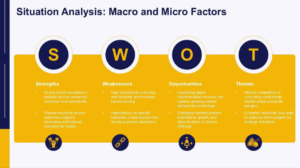
Strengths
- Large customer base and strong brand recognition.
- Established connectivity platform and 5G capabilities.
- Broader ecosystem of digital services and broadband.
- Distribution and technology capabilities.
Weaknesses
- Significant ongoing infrastructure investment.
- Low-price expectations that can complicate monetization.
- Potential complexity in comparing a broad product portfolio.
- Service experience that can vary by location and network conditions.
Opportunities
- Growing demand for 5G and home broadband.
- Enterprise connectivity and technology solutions.
- AI-related products and digital-service innovation.
- Greater value from complementary products.
Threats
- Competitive pressure from established operators.
- Regulatory changes and compliance requirements.
- Technology execution and monetization risks.
- Customer dissatisfaction, pricing pressure and changing expectations.
This SWOT is a strategic analysis, not a substitute for official financial and regulatory disclosures. Opportunities do not guarantee growth, and strengths do not eliminate risk.
11. What Small Businesses and Startups Can Learn from Jio

Jio’s scale cannot be replicated by most small businesses, but its marketing principles can be adapted.
1. Understand the Customer’s Biggest Problem
A coaching centre should identify whether its customers need affordability, flexible schedules, better teaching or exam preparation before designing an offer.
2. Create a Clear Value Proposition
A service provider should explain its specialization and benefits rather than relying only on general claims about quality.
3. Reduce Barriers to Trial
A consultant might offer a clearly defined introductory session or paid audit that lets a customer evaluate the service.
4. Use Discounts Strategically
A retailer should calculate margins and use limited offers to encourage adoption without training customers to wait permanently for discounts.
5. Build Trust Before Asking for a Large Commitment
Clear service descriptions, transparent pricing, useful content and responsive communication can reduce customer uncertainty.
6. Simplify Onboarding
A web-development business can make discovery, proposals, payments and project initiation straightforward.
7. Improve Customer Access
A local business can combine its website, relevant business listings, telephone and WhatsApp communication where appropriate.
8. Offer Complementary Services
A photographer may offer albums or editing as optional additions to the core photography package.
9. Prioritize Retention
A gym can improve member communication, service quality and renewal reminders rather than relying entirely on new-member discounts.
10. Use Data to Improve Decisions
A retailer should track which channels produce completed purchases rather than counting social-media likes alone.
11. Build Brand Recognition
A specialist business should communicate its positioning consistently across relevant channels.
12. Measure Profitability
A campaign that generates many leads can still lose money if few prospects convert or service-delivery costs are excessive.
13. Adapt to Technology
Adopt tools when they improve customer experience or operational efficiency, rather than following trends without a clear business objective.
14. Communicate Honestly
Avoid fabricated testimonials, unsupported performance guarantees and misleading claims.
The central lesson is to adopt the principles behind Jio’s strategy without copying its scale of spending, investment or pricing intensity.
12. How to Apply Jio’s Marketing Lessons to Your Business: A 30-Day Plan
Week 1: Research and Positioning
Actions
- Define the ideal customer.
- Research competitors.
- Identify customer pain points.
- Develop a clear value proposition.
- Establish measurable objectives.
Deliverables: Customer profile, competitor analysis, positioning statement and baseline performance report.
KPIs: Qualified inquiries, current conversion rate, average order value and acquisition cost where available.
Week 2: Offer and Customer Acquisition
Actions
- Develop a relevant offer with transparent terms.
- Create or improve landing pages and service pages.
- Prepare advertising creatives.
- Configure lead capture and tracking.
- Establish a lead qualification process.
Deliverables: Offer, landing page, creative assets, tracking plan and follow-up process.
KPIs: Landing-page conversion rate, form completion rate, cost per lead and qualified-lead percentage.
Week 3: Campaign Execution
Actions
- Publish relevant SEO content.
- Launch suitable Google Ads or Meta Ads campaigns where justified.
- Test different messages and offers.
- Measure lead quality.
- Improve the customer journey.
Deliverables: Campaigns, creative variations, lead reports and documented tests.
KPIs: Qualified leads, cost per qualified lead, click-through rate, conversion rate and sales opportunities.
Week 4: Optimization and Retention
Actions
- Review campaign performance.
- Estimate acquisition costs and contribution margins.
- Improve sales follow-up.
- Build appropriate retention and referral mechanisms.
- Plan the next optimization cycle.
Deliverables: Performance review, optimization priorities and next-month plan.
KPIs: Lead-to-customer conversion, acquisition cost, revenue by channel and repeat-purchase or retention rates where measurable.
A 30-day plan creates a disciplined process for learning and improvement. It cannot guarantee a particular revenue result because performance depends on the offer, budget, market, competition and sales execution.
13. How 2 NICE LIFE Can Help Businesses Apply These Marketing Lessons

Jio’s journey demonstrates that effective growth requires more than advertising. Positioning, customer acquisition, distribution, conversion and retention must support one another.
2 NICE LIFE — Your Growth Partner helps businesses explore digital marketing and business growth solutions suited to their requirements.
Visit https://2nicelife.com/ to review the agency’s current service offerings and determine which solutions fit your business goals.
Relevant marketing activities may include:
- Digital marketing strategy and consulting.
- SEO and content marketing.
- Google Ads and Meta Ads.
- PPC and paid media management.
- Lead generation.
- Landing pages and conversion optimization.
- Website and app development.
- Marketing analytics and campaign optimization.
- Brand positioning and customer acquisition planning.
The appropriate service depends on the problem a business needs to solve.
If your website receives traffic but generates few inquiries, improving the offer and landing page may be more valuable than simply buying additional traffic.
If your business depends heavily on discounts, stronger differentiation and customer retention may reduce that dependence.
If you cannot determine which marketing channels generate customers, better tracking and campaign reporting can support more informed decisions.
Explore digital marketing solutions at https://2nicelife.com/ and consider how a structured strategy could support your business objectives.
14. Frequently Asked Questions About Jio’s Marketing Strategy
What is Jio’s marketing strategy?
Jio’s marketing strategy combines affordable connectivity, introductory offers, competitive pricing, distribution, technology positioning, brand communication and digital ecosystem development.
How did Jio become popular in India?
Jio introduced free promotional services and an affordable data proposition, encouraging customers to try its network. Distribution, network investment and demand for mobile internet also contributed to adoption.
Why did Jio introduce free or promotional offers?
Promotional offers reduced the cost of trying a new service and encouraged adoption. They also created opportunities for customers to experience the product before purchasing paid plans.
What role did pricing play in Jio’s growth?
Pricing was central to Jio’s early positioning. Affordable data attracted attention and intensified competition, although sustainable performance also depends on revenue, retention and network costs.
How did Jio acquire customers?
Jio combined introductory offers, competitive tariffs, distribution, brand awareness and network expansion to reduce barriers to adoption.
How did Jio change the Indian telecom market?
Jio intensified competition around data pricing and usage, changing consumer expectations and encouraging greater focus on mobile data. Other operators and broader digital developments also influenced the market.
What is Jio’s 5G marketing strategy?
Jio communicates 5G capabilities, coverage and potential use cases. Actual performance depends on local availability, compatible devices, network conditions and plan eligibility.
What role do Jio’s digital services play in its business?
Digital services extend Jio’s proposition beyond mobile connectivity and create opportunities for complementary products and additional revenue. The financial contribution of individual services should be evaluated through company disclosures.
What is the difference between Jio Platforms and Reliance Jio Infocomm?
Jio Platforms is the digital and technology holding company associated with the broader platform business. Reliance Jio Infocomm is the telecom operating company. Reliance Industries is the parent company.
What is the latest status of the Jio Platforms IPO?
As of 15 October 2026, the IPO was scheduled to open on 21 October and close on 23 October 2026, with a reported price band of ₹1,065–₹1,119 per share. Always check the latest official offer documents for updated terms.
How is IPO communication different from consumer marketing?
Consumer marketing promotes products or services. IPO communication explains a company’s business, financial performance, share offering and risks to prospective investors under applicable disclosure requirements.
What are the major risks associated with Jio’s business model?
Risks include competition, regulatory requirements, capital expenditure, pricing pressure, service expectations and challenges in monetizing new products. Investors should consult the official offer document for the complete disclosed risk factors.
What can startups learn from Jio’s marketing strategy?
Startups can learn to identify customer problems, create a differentiated offer, simplify onboarding, build complementary services and measure retention and profitability.
How can small businesses implement similar marketing principles?
Small businesses can begin with customer research, clear positioning, a relevant offer, SEO, targeted advertising, landing pages and lead tracking. Their strategies should fit their budgets and business economics.
How can 2 NICE LIFE help businesses develop a digital marketing strategy?
Visit https://2nicelife.com/ to explore the agency’s current services and determine whether support with digital marketing, customer acquisition, content, advertising or website improvement fits your business goals.
Conclusion: The Long-Term Lessons of Jio’s Marketing Strategy

Jio’s journey from 2016 to 2026 is best understood as a combination of pricing, distribution, technology, customer experience, brand positioning, ecosystem development and monetization.
Its introductory offers helped reduce the barriers to trial. Affordable data strengthened its value proposition. Network investment and distribution supported accessibility, while digital services, broadband and 5G created additional opportunities.
These strategies were not risk-free. Large-scale investment, competitive pressure, customer expectations and the challenge of converting adoption into sustainable financial performance remained important considerations.
The 2026 Jio Platforms IPO adds another dimension to the case study: corporate storytelling, financial disclosure, investor communication and market expectations.
For smaller businesses, the lesson is not to copy Jio’s spending or scale. It is to understand customers, communicate a differentiated offer, make purchasing easier, deliver the promised experience and measure whether growth is profitable.
Businesses that want to improve their SEO, advertising, lead generation or conversion strategy can visit https://2nicelife.com/ to explore 2 NICE LIFE — Your Growth Partner.
References and Sources
- Reliance Industries Limited, Integrated Annual Report 2025–26: https://www.ril.com/reports/RIL-Integrated-Annual-Report-2025-26.pdf
- Jio, Official True 5G Information: https://www.jio.com/5g/
- Securities and Exchange Board of India, Jio Platforms IPO Filing: https://www.sebi.gov.in/filings/public-issues/jun-2026/jio-platforms-ltd-drhp_102248.html
- Reliance Industries, Corporate Announcements: https://www.ril.com/investor/resource-center/corporate-announcements
- Telecom Regulatory Authority of India, Telecom Subscription Reports: https://www.trai.gov.in/release-publication/reports/telecom-subscriptions-reports
- Business Standard/Reuters, Historical Reporting on Jio’s 2016 Launch: https://www.business-standard.com/article/reuters/india-s-richest-man-unveils-telecoms-venture-with-free-calls-cut-price-data-116090100739_1.html
- Reuters, Jio Platforms IPO Reporting, October 2026: https://www.reuters.com/world/india/mukesh-ambanis-jio-files-updated-prospectus-record-india-ipo-2026-10-14/
- Jio Platforms, Official IPO and Investor Relations Information: https://www.jio.com/about/investor-relations/ipo/
Editorial note: IPO dates, offer terms, financial figures and regulatory disclosures can change. Verify the latest official documents before publishing or updating this article.