

CJP Marketing Strategy Case Study introduction: Some brands spend years trying to get noticed. Others become part of a national conversation almost oveThe rise of the Cockroach Janta Party, commonly known as CJP, presents an unusual example of how a powerful public moment can become the starting point for a recognizable identity, a social media conversation, and a broader movement.

Founded by Abhijeet Dipke in May 2026, CJP emerged after remarks by Chief Justice of India Surya Kant about certain individuals being like cockroaches became the subject of public debate. Dipke used the moment to launch a satirical platform that attracted attention from young people and the media. The movement subsequently expanded its messaging around issues such as education, unemployment, and public accountability. Source: The Indian Express.
But what makes this story relevant to marketing professionals, entrepreneurs, and business owners?
It raises an important question: How does an idea move from a single social media post to a recognizable brand?
The answer involves several marketing principles, including emotional relevance, distinctive branding, timely communication, audience participation, and consistent messaging.
This article examines the CJP marketing strategy as a communications and branding case study. It is not an endorsement of any political party or ideology. The objective is to understand the marketing mechanisms involved, separate documented events from assumptions, and identify practical lessons that businesses can apply ethically.
What Is the Cockroach Janta Party (CJP)?

The Cockroach Janta Party is a satirical youth-led political and social movement that emerged in India in May 2026. Its public identity developed around the phrase “cockroach,” which became a symbol used to challenge the perceived dismissal of young people and their concerns.
Abhijeet Dipke, the movement’s founder, helped turn this unusual concept into a recognizable online identity.
Early reporting described CJP as a youth pressure group rather than a conventional registered political party. In August 2026, Dipke reportedly discussed the organization’s plans to focus on public issues and nationwide outreach instead of immediately entering electoral politics. Source: India Today.
This distinction matters because the marketing of a movement differs from the marketing of a traditional product.
A product brand generally needs customers to understand its benefits and make a purchase. A movement must communicate an idea, create a shared identity, encourage participation, and maintain public interest over time.
CJP provides a useful example of how these communication challenges can overlap.
1. The Origin of CJP: Turning a Public Moment Into a Brand Identity
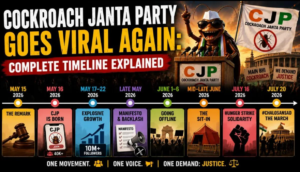
One of the most interesting elements of the CJP marketing strategy is how it emerged from an unexpected event rather than a conventional product launch.
In May 2026, comments made during a Supreme Court hearing became the subject of widespread discussion. The Chief Justice later clarified the context of the remarks, but the controversy had already entered public conversation.
Abhijeet Dipke responded with a satirical idea that helped establish CJP’s identity.
The marketing lesson is not that every controversy creates an opportunity. It is that a timely response can become meaningful when it connects with an existing audience concern.
Why the original idea attracted attention
Several factors help explain its potential appeal.
A recognizable trigger: People could connect the new identity to a specific public event.
An unusual name: “Cockroach Janta Party” was distinctive and difficult to confuse with an ordinary institutional name.
An emotional interpretation: Supporters could use the identity to express frustration, disagreement, or solidarity.
A simple concept: The basic idea was relatively easy to explain and share.
For marketers, this demonstrates the importance of positioning. A brand does not necessarily need a complicated message. It needs a clear reason for people to understand it, remember it, and discuss it.
However, an unusual name alone does not build a sustainable brand. The meaning attached to that name must continue to develop.
2. Brand Positioning: Why an Unusual Name Can Be Memorable
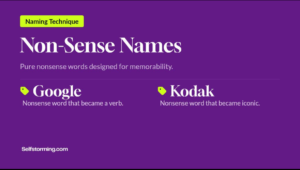
Brand positioning determines how an audience understands and distinguishes an organization from alternatives.
Most brands compete using familiar language. They describe themselves as innovative, reliable, affordable, customer-focused, or premium.
CJP used a very different identity.
The name was unconventional, provocative, and connected to the event that inspired its creation. That gave the movement an immediately recognizable starting point.
The psychology behind distinctive branding
There are three useful concepts to understand.
Distinctiveness: An unusual name can stand out in a crowded information environment.
Association: When a name is connected to a memorable event, people may recall the brand whenever they encounter related discussions.
Identity: A shared label can give supporters a simple way to express that they identify with a particular message.
These principles also apply to business marketing.
For example, a digital marketing agency that describes itself only as a company providing SEO, social media marketing, and advertising services may sound similar to dozens of competitors.
A stronger brand communicates a recognizable promise, a specific audience, and a clear reason to choose it.
For 2 NICE LIFE, that promise is captured in the positioning statement: “Your Growth Partner.”
The practical lesson is to build a brand identity that people can understand and remember without needing a long explanation.
3. Viral Marketing Strategy: Why People Share Some Ideas
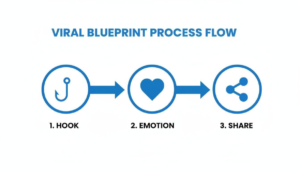
Virality is often misunderstood.
A post does not become viral simply because it is funny, controversial, or visually attractive. Its performance depends on several factors, including audience relevance, timing, creative execution, distribution, and the willingness of people to share it.
The CJP story illustrates how these factors can work together.
Emotional relevance
People are more likely to engage with a message when they believe it reflects something they care about.
In CJP’s case, the discussion connected with broader public concerns about youth, employment, education, and institutional accountability.
This does not mean every person who interacted with the movement agreed with its message. Attention, agreement, criticism, and curiosity are different forms of engagement.
For marketers, this distinction is essential. A large number of views does not automatically indicate customer trust or purchase intent.
Shareability
A message is easier to share when people can explain it quickly.
A distinctive name, a concise statement, a recognizable visual, or a relatable situation can reduce the effort required to understand a post.
Businesses can use the same principle by creating content around one clear idea instead of trying to communicate every benefit in a single creative.
Timing
When a subject is already attracting public attention, relevant content may have a better opportunity to reach an interested audience.
However, publishing quickly should not mean publishing inaccurate information. A business that joins a trending conversation without understanding its context can damage its reputation.
Marketing takeaway: Be relevant, be recognizable, and be timely—but verify your facts before publishing.
4. Social Media Branding: Creating a Recognizable Identity

Social media audiences encounter thousands of posts from different creators, companies, and organizations. Consistency helps people recognize a brand across repeated interactions.
Reporting on Dipke’s communications background and CJP’s launch highlights the role of public relations and deliberate campaign design in shaping its identity. Source: Boston University.
A recognizable social media identity generally combines several elements:
- A consistent name and profile identity.
- A clear message that can be understood quickly.
- Visual elements that are easy to recognize.
- Content that relates to the audience’s interests.
- Repeated communication around a central purpose.
Why consistency matters more than random posting
Imagine a business that publishes a motivational quote on Monday, an unrelated meme on Tuesday, a product advertisement on Wednesday, and an unrelated news story on Thursday.
Even if individual posts receive attention, the audience may struggle to understand what the business represents.
A more effective approach uses different content formats to reinforce the same brand promise.
For example, a digital marketing agency could publish:
- Educational content explaining SEO.
- Short videos demonstrating advertising mistakes.
- Case studies showing how marketing decisions affect business results.
- Customer questions answered by an expert.
- Behind-the-scenes content showing how campaigns are planned.
The formats differ, but the overall message remains consistent.
That is the difference between simply posting content and building a brand.
5. Audience Psychology: Recognition, Belonging, and Participation

Marketing is not only about what a brand says. It is also about what people believe the brand says about them.
Some customers buy products because of convenience or price. Others care about status, identity, values, or the communities associated with a brand.
Social movements can use these psychological mechanisms to encourage participation, although the motivations of individual participants cannot be assumed without evidence.
The role of shared identity
A recognizable identity can make it easier for people to communicate that they belong to a group.
In business, similar dynamics appear in professional communities, customer clubs, creator audiences, and brand communities.
A fitness brand might encourage customers to share progress. A software company might build a community where users exchange practical advice. A marketing agency might publish educational resources that help entrepreneurs feel more confident about growing their businesses.
The strongest communities provide value beyond repeated promotional messages.
Participation is different from passive attention
A person watching a video is not necessarily interested enough to become a customer.
A person commenting may be curious, supportive, or critical. A person who subscribes, attends a workshop, requests a proposal, or makes a purchase demonstrates a different level of commitment.
Businesses should therefore measure the entire customer journey rather than judging success by likes and views alone.
Useful metrics include:
- Qualified website visits.
- Email or newsletter subscriptions.
- Relevant inquiries.
- Consultation bookings.
- Conversion rate.
- Customer acquisition cost.
- Repeat purchases and customer retention.
These indicators help establish whether attention is producing meaningful business outcomes.
6. From Online Attention to Real-World Action
One of the most important questions in any viral marketing case study is whether digital attention leads to sustained participation.
An online audience can grow rapidly, but maintaining that attention requires more than a memorable name or a successful post.
CJP’s subsequent public activity and outreach around education and unemployment demonstrate a shift from its original satirical identity toward broader public issues. The Indian Express reported on the movement’s nationwide youth outreach initiative in August 2026. Read the report.
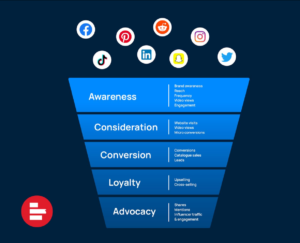
For businesses, this transition can be understood through a simple marketing funnel.
Stage 1: Awareness
People discover a brand through search, social media, advertising, referrals, or public discussion.
Stage 2: Interest
They visit the website, explore the offer, watch more videos, or read an article.
Stage 3: Trust
They review case studies, compare alternatives, evaluate expertise, and look for evidence that the company can deliver.
Stage 4: Conversion
They take a measurable action, such as requesting a consultation, purchasing a service, or signing up.
Stage 5: Retention
They continue using the service, return for additional purchases, or recommend the business to others.
A viral post may help with awareness, but it cannot replace the other stages.
For a service business, a smaller audience of relevant decision-makers can be more valuable than millions of viewers who have no intention of buying.
7. Reputation Management and the Risks of Controversial Branding
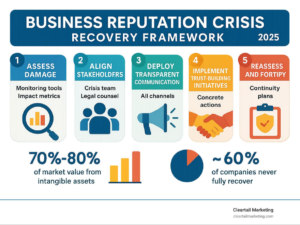
Controversy can attract attention, but it can also create serious risks.
The CJP story includes disputes over online access and legal scrutiny. In May 2026, The Indian Express reported that the movement’s X account had been withheld in India following a government direction, and the matter subsequently reached the Delhi High Court. Source: The Indian Express.
This is an important reminder that attention and reputation are not the same thing.
A brand may attract enormous discussion while also facing questions about credibility, public perception, platform access, or the consequences of its messaging.
Businesses should be particularly careful about copying controversial tactics without understanding their potential impact.
What businesses should learn
Do not confuse controversy with strategy. A provocative message may attract attention, but it must serve a clear and defensible purpose.
Protect brand credibility. Exaggerated claims may generate clicks but can weaken trust.
Understand platform policies. Social media accounts and advertising campaigns operate under platform rules that can change.
Avoid relying on one channel. A business that depends entirely on one social platform is vulnerable to algorithm changes, account restrictions, and sudden declines in reach.
Prepare for criticism. Clear communication, documented facts, and a professional response process are essential.
The objective should be sustainable growth—not attention at any cost.
8. What the Latest CJP Developments Mean for Marketing Analysis

CJP continued to attract attention beyond its initial launch. In October 2026, protests associated with the movement focused on demands involving the Chief Election Commissioner and the Special Intensive Revision of electoral rolls.
Reuters reported on October 11, 2026, that Abhijeet Dipke and two other senior CJP leaders had been released from detention, according to Dipke’s lawyer. Read the Reuters report.
These developments show why a case study should not treat a viral launch as the complete story.
A brand or movement can change its message, audience, objectives, and public reputation over time. New developments may strengthen its identity, complicate its positioning, or change how different audiences interpret it.
For marketers, this means a case study should be updated as evidence changes. Early engagement figures do not prove long-term success, and later events should not automatically be interpreted as proof that the original marketing strategy worked.
A responsible analysis separates documented events from interpretations and avoids attributing major political outcomes to a single campaign without sufficient evidence.
9. CJP Marketing Strategy SWOT Analysis
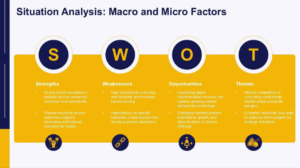
The following SWOT analysis evaluates CJP as a communications case study, not as a political endorsement.
| Factor | Marketing analysis |
|---|---|
| Strengths | Distinctive identity, memorable name, timely launch, strong public curiosity |
| Weaknesses | Potential dependence on controversy, difficulty maintaining attention, risk of a message becoming too broad |
| Opportunities | Youth outreach, issue-based communication, community participation, sustained public-interest content |
| Threats | Reputation risks, platform restrictions, competing narratives, misinformation, changing public interest |
Strengths: Distinctive positioning
A memorable identity can make a new organization easier to recognize in a crowded information environment.
Weaknesses: Dependence on the original moment
When a brand begins with a specific controversy, it must eventually establish a broader purpose. Otherwise, public interest may decline when the original event becomes less relevant.
Opportunities: Expanding into useful communication
Issue-based explainers, public discussions, and audience feedback can help an organization demonstrate what it stands for beyond its initial identity.
Threats: Credibility and continuity
If a brand’s communication becomes inconsistent, inaccurate, or excessively dependent on outrage, audience trust may suffer.
For businesses, the lesson is to build an identity that can survive after the original launch campaign ends.
10. Seven Marketing Lessons Businesses Can Learn From CJP
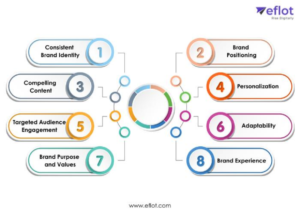
The CJP marketing strategy case study offers several practical lessons for entrepreneurs and marketing teams.
Lesson 1: Build a clear brand position
People should understand what your business does, who it serves, and why it matters.
A clear position makes it easier to create consistent content, improve website messaging, and communicate value.
Lesson 2: Understand the audience before creating content
Research the questions, frustrations, needs, and objections of your intended audience.
Do not assume that a topic is important simply because it is trending.
Lesson 3: Make your message easy to remember
Use straightforward language, distinctive visual elements, and a consistent central idea.
Complexity can be useful in detailed educational content, but your core message should remain understandable.
Lesson 4: Give people a reason to participate
Ask relevant questions, answer comments, share useful resources, and create opportunities for meaningful interaction.
Participation should provide value to the audience rather than manipulate emotions.
Lesson 5: Connect content with a real objective
Every campaign should have a purpose.
That purpose might be increasing qualified traffic, generating leads, building a subscriber base, or improving customer retention.
Lesson 6: Use data instead of assumptions
Track the performance of content and campaigns. Identify which topics generate relevant engagement and which lead to measurable business results.
Avoid treating views, likes, or follower counts as proof of revenue.
Lesson 7: Build beyond social media
Create a website, publish useful resources, develop an email list where appropriate, and establish clear conversion paths.
These assets give your business more control over its long-term customer relationships.
11. How 2 NICE LIFE Can Help Businesses Apply These Marketing Lessons

Understanding a successful marketing case study is only the first step. The next step is turning the lessons into a practical strategy for your own business.
At 2 NICE LIFE — Your Growth Partner, the focus is on helping businesses strengthen their digital presence, communicate their value, and develop a more structured approach to online growth.
Depending on your business requirements, this can include:
- SEO services: Improve website structure, search visibility, and the quality of organic traffic.
- Content marketing: Develop useful articles, social media content, and campaign messaging around customer needs.
- Google Ads and Meta Ads: Reach relevant audiences and measure campaign performance.
- Lead generation: Build a clearer path from discovery to inquiry and conversion.
- Website development: Create a website that communicates your offer and supports business objectives.
- Digital marketing strategy: Connect content, advertising, landing pages, and conversion tracking into a coordinated plan.
No agency can honestly guarantee a particular Google ranking or a fixed amount of revenue without considering the business, competition, budget, and execution. A credible strategy starts with clear goals, measurable indicators, and ongoing improvement.
If you want to explore digital marketing, SEO, website development, or lead generation for your business, visit 2 NICE LIFE — Your Growth Partner.
The aim is not simply to get more attention. It is to help turn relevant attention into meaningful business opportunities.
12. A Practical 30-Day Digital Marketing Plan for Businesses
The following plan adapts the general lessons of positioning, consistent communication, and measurable growth into a practical business workflow.
| Timeline | Action | Main objective |
|---|---|---|
| Days 1–3 | Define your target audience and core offer | Clear positioning |
| Days 4–6 | Research customer questions and search intent | Topic selection |
| Days 7–10 | Improve key website pages and calls to action | Better user experience |
| Days 11–15 | Publish helpful SEO-focused content | Organic visibility |
| Days 16–20 | Create short videos and social media posts from the content | Content distribution |
| Days 21–24 | Review website analytics and lead quality | Performance analysis |
| Days 25–27 | Improve underperforming headlines and landing pages | Conversion optimization |
| Days 28–30 | Review results and prepare the next month’s plan | Continuous improvement |
This is a starting framework, not a guarantee of rankings or sales within 30 days. SEO results depend on factors such as competition, website history, content quality, technical performance, and the authority of the website.
Frequently Asked Questions About the CJP Marketing Strategy
What is the CJP marketing strategy?
The CJP marketing strategy is a useful case study in distinctive branding, timely communication, emotional relevance, social media attention, and the challenge of maintaining engagement beyond an initial viral moment.
Who founded the Cockroach Janta Party?
Abhijeet Dipke founded the Cockroach Janta Party in May 2026 after a public controversy involving remarks by Chief Justice of India Surya Kant. Read the background report.
Why did the Cockroach Janta Party attract attention?
Its unusual name, connection to a widely discussed public event, satirical positioning, and focus on issues affecting young people helped it enter public conversation. The relative contribution of each factor cannot be established from attention alone.
Is CJP a registered political party?
Early reporting described CJP as a youth pressure group rather than a conventional registered political party. Its legal and organizational status should be verified against current official records before making a definitive claim.
What can businesses learn from CJP?
Businesses can learn the importance of clear positioning, memorable communication, audience relevance, consistent branding, and converting attention into measurable outcomes. They should not assume that controversy is necessary for growth.
Can a viral marketing campaign guarantee business growth?
No. Viral reach can increase awareness, but sales depend on additional factors, including audience relevance, product quality, pricing, trust, customer experience, and the conversion process.
How can SEO help a business grow organically?
SEO helps search engines understand a website and helps people discover relevant pages through search. Useful content, clear site structure, technical accessibility, relevant internal links, and a good user experience can support organic visibility, although rankings are never guaranteed.
How can 2 NICE LIFE help with digital marketing?
2 NICE LIFE offers digital marketing support that can include SEO, content strategy, paid advertising, lead generation, and website development. Visit 2nicelife.com to explore the agency’s services.
Conclusion: The Real Lesson Behind the CJP Marketing Strategy
The Cockroach Janta Party marketing case study demonstrates why distinctive branding and timely communication deserve attention from marketers.
An unexpected public moment can create an opening for a new identity. A clear message can help people understand that identity. Social media can amplify the conversation. But long-term relevance depends on what happens next.
For businesses, the most valuable lessons are straightforward: understand your audience, communicate a clear promise, create useful content, measure meaningful results, and build assets that remain valuable after a campaign ends.
A viral moment may attract attention. A strong brand gives people a reason to remember you. A well-designed marketing system gives them a reason to take action.
Looking to build a stronger digital presence for your business? Explore the SEO, advertising, content, and website solutions available from 2 NICE LIFE — Your Growth Partner.
Sources and Further Reading
Use these links to verify the case study and explore the reporting behind the analysis.
- The Indian Express — Background and origins of the Cockroach Janta Party
- Boston University — Abhijeet Dipke and the rise of CJP
- India Today — CJP’s plans as a pressure group
- The Indian Express — CJP’s youth outreach campaign
- The Indian Express — Legal proceedings involving CJP’s X account
- Reuters — Report on the release of CJP leaders, October 11, 2026
Editorial note: This article analyzes publicly reported events from a marketing and communications perspective. It does not endorse a political organization. Verify subsequent developments, official records, and disputed claims before publication.
Important Article:
Zomato Marketing Strategy: The Complete Evolution from 2008 to 2026