

UPI Marketing Strategy and Technology is an important topic for understanding how India transformed everyday digital payments through technology, interoperability, merchant adoption and customer-focused product design. From scanning QR codes at local shops to paying online and transferring money between bank accounts, the Unified Payments Interface (UPI) has changed how millions of people and businesses approach digital transactions.
This complete guide explores UPI’s history and evolution, underlying technology, marketing strategy, advantages and disadvantages, security challenges, business model, international expansion and future opportunities. It also explains how entrepreneurs, marketers and businesses can apply UPI’s growth lessons to their own digital strategies.
Research cutoff: October 13, 2026. Transaction statistics, product availability and regulatory policies should be checked against the latest official publications before the article goes live.
Table of Contents
- What Is UPI and How Does It Work?
- History and Evolution of UPI in India
- UPI Technology Explained
- UPI Marketing Strategy: Why Did Adoption Grow So Quickly?
- UPI vs Other Payment Systems
- Advantages and Disadvantages of UPI
- UPI Security and Fraud Prevention
- Business and Merchant Marketing Opportunities
- UPI Business Model and Economic Sustainability
- UPI’s Impact on India’s Digital Economy
- UPI International Expansion
- UPI SWOT Analysis
- Future of UPI: 2027 and Beyond
- Lessons for Digital Marketers and Entrepreneurs
- What Businesses Can Learn from UPI’s Marketing Strategy
- Frequently Asked Questions About UPI
- Conclusion
1. What Is UPI and How Does It Work?
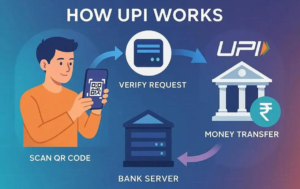
UPI stands for Unified Payments Interface. It is an interoperable digital-payment system developed by the National Payments Corporation of India (NPCI) that enables customers to make payments through participating banks and supported payment applications.
UPI allows users to send money, pay merchants, scan QR codes and complete eligible online transactions without manually entering full bank-account details for every payment.
Unlike a conventional stored-value wallet, a typical bank-account-linked UPI payment authorizes a transaction from a linked bank account. The payment application provides the interface, while participating institutions and the UPI infrastructure facilitate payment processing.
Who Developed UPI?
NPCI developed UPI as part of India’s retail-payment infrastructure. The Reserve Bank of India (RBI) regulates the broader payment ecosystem, while participating banks maintain customer accounts and perform relevant banking functions.
Several payment applications provide access to UPI, including BHIM, PhonePe, Google Pay, Paytm, Amazon Pay and bank-owned applications. Their features and availability vary.
Official sources:
- NPCI: https://www.npci.org.in/
- UPI product statistics: https://www.npci.org.in/product/upi/product-statistics
- RBI: https://www.rbi.org.in/
How Does UPI Work in India?
A typical UPI transaction follows these steps:
- The customer opens a supported UPI application.
- The customer selects a recipient, enters a UPI ID, selects a supported contact or scans a merchant QR code.
- The app displays the payment details.
- The customer verifies the recipient and amount.
- The customer authorizes the payment using the required authentication method, typically a UPI PIN for an ordinary bank-account-linked payment.
- The request is processed through the applicable UPI infrastructure and participating institutions.
- The transaction status is communicated to the customer and recipient through the relevant systems.
This process makes UPI useful for person-to-person transfers, retail purchases, online checkout and other supported payment use cases.
Why Is UPI Important for India’s Digital Economy?
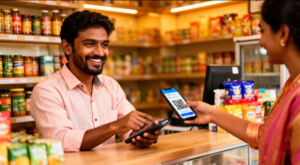
UPI has helped make digital payments accessible across many everyday situations. Customers can use participating applications at eligible merchants, while businesses can accept digital payments through supported QR codes and online integrations.
Its importance extends beyond convenience. UPI is also a case study in digital public infrastructure, product distribution, interoperability, consumer adoption and ecosystem marketing.
2. History and Evolution of UPI in India

UPI did not emerge in isolation. It developed on the foundation of India’s existing banking and electronic-payment systems.
Before UPI: India’s Digital Payment Landscape
Before UPI, customers and businesses already used several payment methods:
- NEFT: Electronic bank transfers under the applicable NEFT framework.
- RTGS: Real-time gross settlement, particularly relevant to high-value transfers.
- IMPS: Immediate Payment Service for eligible electronic fund transfers.
- Mobile banking: Banking services accessed through mobile applications.
- Internet banking: Online account management and electronic transfers.
- Debit and credit cards: Payment instruments used at physical and online merchants.
- Digital wallets: Services that can store prepaid value or provide payments under their respective arrangements.
These methods served different purposes, but payment experiences could vary between institutions and use cases. UPI aimed to simplify payment initiation while connecting participating institutions through shared infrastructure.
UPI Timeline: 2016 to 2026
2016: UPI Pilot Launch
NPCI records April 2016 as the UPI pilot launch period. UPI introduced an interoperable approach to bank-account payments, allowing participating applications to support convenient payment experiences.
2016: BHIM Introduced
The Bharat Interface for Money (BHIM) application helped make UPI more accessible to the public. It provided a recognizable application through which users could explore bank-account-linked digital payments.
2017 Onward: QR-Code Payments and Merchant Adoption
Interoperable QR codes helped merchants accept payments from customers using different supported UPI applications. This was important for everyday retail transactions because customers did not necessarily need the same payment app as the merchant’s provider.
2017 Onward: Growth of Private Payment Applications
PhonePe, Google Pay, Paytm, Amazon Pay and bank-owned applications contributed to competition over payment interfaces, onboarding, merchant services and customer engagement.
These companies did not develop one single shared consumer application. They operated separate products that could access UPI through the applicable participation arrangements.
2020 Onward: COVID-19 and Digital Payments
The pandemic increased attention to contactless payments, online shopping and remote transactions. UPI’s growth during this period reflected several interacting factors, including existing digital infrastructure, merchant acceptance, consumer behavior and changes in shopping habits.
The pandemic should not be treated as the sole cause of UPI adoption.
2022 Onward: Additional Payment Experiences
UPI’s ecosystem expanded through features and initiatives such as UPI Lite, UPI 123PAY, UPI AutoPay and other supported payment experiences. Each feature has specific eligibility conditions, limits and institutional requirements.
2022 Onward: Credit-Linked UPI Payments
Eligible RuPay credit cards were enabled for UPI payments under applicable arrangements. This expanded payment options for supported users, but credit-linked UPI functionality is not available for every card or transaction type.
2024 Onward: Delegated Payments and Additional Features
UPI Circle introduced a delegated-payment model under which a primary user can authorize another user to make eligible payments within defined conditions. Other initiatives have expanded ways to initiate or manage payments.
2025–2026: Continued Ecosystem Development
The continuing evolution of UPI involves transaction limits for specified categories, payment security, merchant services, recurring payments and international acceptance. Each development should be assessed using the relevant official circular and current eligibility rules.
September 2026: Large-Scale UPI Usage
NPCI’s September 2026 monthly statistics report approximately 24.07 billion transactions worth ₹29.37 trillion. These figures describe system-wide monthly transaction volume and value, not the performance of an individual payment application.
Source: https://www.npci.org.in/product/upi/product-statistics
3. UPI Technology Explained
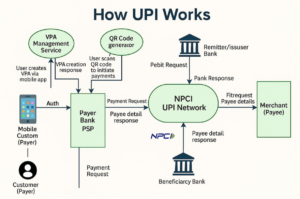
UPI is an interoperable payment interface that connects participating applications and banking institutions through a common ecosystem.
Understanding its technology helps explain why UPI is different from a standalone wallet or a bank’s mobile application.
Key Components of UPI Technology
1. UPI Application
The application is the customer-facing interface for initiating and managing eligible payments.
2. Virtual Payment Address
A Virtual Payment Address (VPA), commonly called a UPI ID, is a payment identifier that can be used instead of sharing full bank-account details with the payer.
3. Payer Bank
The payer bank maintains the account from which the payment is authorized and debited, subject to the applicable transaction flow.
4. Payee Bank
The payee bank maintains the recipient’s account and performs the relevant account-level payment functions.
5. Payment Service Provider
A payment service provider supplies approved connectivity or services within the UPI ecosystem.
6. Third-Party Application Provider
A third-party application provider offers a UPI-enabled application through the applicable approved participation arrangement.
7. NPCI UPI Infrastructure
NPCI’s infrastructure supports interoperable payment processing between participating institutions.
UPI Transaction Flow
Customer → UPI App → UPI Infrastructure and Participating Providers → Relevant Banks → Transaction Response
This is a simplified conceptual representation, not a complete technical architecture. The exact routing, authentication and settlement arrangements depend on the payment type and participating institutions.
How Does a UPI QR Code Work?
A merchant QR code contains payment-related information or an identifier that a compatible application can read.
The customer scans the code, checks the displayed recipient and amount, and authorizes the payment. The customer and merchant should verify the actual transaction status through the relevant application or bank records.
A QR code alone does not prove that a payment has been completed.
What Happens When a UPI Payment Fails?
UPI transactions may be successful, failed, pending or reversed.
If a payment is pending, the customer should check the transaction history and bank statement before attempting another payment. If money is debited but the recipient has not received it, the customer should save the transaction reference and raise a complaint through the relevant payment application or bank.
Official guidance: https://www.npci.org.in/what-we-do/upi/faqs
UPI vs IMPS, NEFT and RTGS
UPI is an interoperable payment interface. IMPS is an immediate transfer service, NEFT is an electronic funds transfer system, and RTGS is a real-time gross settlement system.
These systems have different operating models and intended use cases. They should not be treated as identical products simply because they all support electronic payments.
4. UPI Marketing Strategy: Why Did Adoption Grow So Quickly?
UPI’s adoption is best understood as the result of an ecosystem rather than one company’s advertising campaign.
NPCI developed the shared infrastructure, banks participated in the system, public initiatives supported digital-payment awareness, and private applications competed to deliver useful payment experiences.
A. Product Strategy: Make Payments Easier
UPI supports several features that can reduce friction in everyday transactions:
- Bank-account-linked payments.
- UPI IDs and supported contact-based payment experiences.
- QR-code merchant payments.
- Interoperability between participating applications.
- Online checkout.
- Eligible recurring payments.
- Additional payment options for selected user groups.
The marketing lesson is that product utility can itself encourage adoption. When a product solves a frequent problem conveniently, customers have more opportunities to use it repeatedly.
This is an analytical interpretation of UPI’s design, not proof that any single feature independently caused its growth.
B. Pricing Strategy: Understanding Free UPI Payments
Many ordinary bank-account-linked UPI payments do not carry a direct customer transaction fee. However, this does not mean that the payment ecosystem operates without costs.
India’s zero-MDR policy applies to specified UPI and RuPay debit-card categories. Government incentive schemes have also supported eligible low-value BHIM-UPI person-to-merchant payments and RuPay debit-card transactions under specified conditions.
The applicable policy depends on the transaction category and the current rules.
Banks, payment applications and service providers still incur infrastructure, compliance, customer support, security and operational costs.
Businesses should check their provider’s terms instead of assuming that every UPI-related product or service is universally free.
Official source: https://financialservices.gov.in/
C. Distribution Strategy: Reach Customers Everywhere
UPI benefits from distribution through participating banks, payment applications, physical merchant QR codes, e-commerce checkout integrations and merchant service providers.
QR codes are particularly useful for small businesses because they can provide a relatively simple method of displaying payment acceptance without requiring a traditional card terminal for every payment situation.
Distribution also depends on practical factors such as smartphone access, connectivity, customer awareness, local-language instructions and support.
D. Promotion and Awareness
Different ecosystem participants use different awareness and acquisition approaches.
Government initiatives: Digital-payment campaigns and eligible incentive schemes can support awareness and adoption.
BHIM: The public-facing application helps users access UPI services and understand bank-account-linked digital payments.
PhonePe: Consumer payments and merchant-facing services provide multiple opportunities for customer engagement.
Google Pay: A familiar mobile application can make everyday digital payments easier to discover and use.
Paytm: Payment services and merchant tools connect consumer payments with broader business services.
Amazon Pay: Payment integration into a commerce ecosystem can reduce friction within supported shopping journeys.
Bank-owned applications: Existing customer relationships can help banks introduce digital payment services.
Cashback, referral offers, advertising, influencer campaigns and seasonal promotions can also be relevant. However, specific campaign claims should be supported by original company announcements or reliable contemporary reporting before publication.
E. Consumer Psychology and Habit Formation
Several marketing concepts help explain how digital payment adoption can develop:
- Convenience: Fewer steps can reduce the effort associated with routine transactions.
- Familiarity: Repeated use can make an interface easier to understand.
- Social proof: Seeing other people and businesses use a payment method can increase awareness.
- Trust: Clear payment confirmation and accessible support can improve confidence.
- Network effects: More participating merchants and customers can increase the usefulness of the system.
- Rewards: Incentives can encourage trial, although long-term retention depends on more than rewards alone.
These are useful analytical concepts, but they should not be presented as quantified scientific findings about UPI without supporting research.
F. Network Effects and Interoperability
UPI connects customers, merchants, banks and application providers.
As more merchants accept UPI, customers gain more opportunities to use it. As more customers use UPI, acceptance becomes more valuable to merchants. Additional participating banks and applications can expand customer choice.
Interoperability also distinguishes UPI from some closed-loop wallet models, in which transfers or acceptance may depend more heavily on the wallet provider’s own ecosystem.
However, interoperability does not eliminate competition. Payment applications can still compete through usability, merchant services, customer support and additional financial products.
5. UPI vs Other Payment Systems
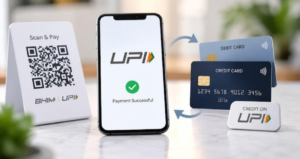
Different payment methods serve different needs. UPI is useful for everyday digital payments, but it does not replace every function of cards, cash, bank transfers or international payment networks.
| Payment method | Main advantages | Main limitations |
|---|---|---|
| Cash | Works without a smartphone or internet connection | Physical handling and limited electronic records |
| Debit card | Direct access to eligible bank funds | Requires supported merchant acceptance and applicable card infrastructure |
| Credit card | Credit facility and potential rewards | Interest, fees and eligibility depend on the card terms |
| Digital wallet | Convenient stored balance and app-specific services | Transfer and acceptance rules can be more limited |
| UPI | Convenient bank-account-linked payments and interoperable QR acceptance | Digital fraud, technical failures and connectivity issues |
| IMPS | Immediate electronic transfers for eligible accounts | May require account details or supported banking interfaces |
| NEFT | Electronic bank transfers | Different processing and customer experience from QR-based retail payments |
| RTGS | Real-time gross settlement for eligible high-value transfers | Not primarily designed for small everyday retail purchases |
| Mobile banking | Access to banking services through an app | Features and usability vary by bank |
| Internet banking | Account management and electronic transfers | Can involve more steps than a QR-based purchase |
| QR-based card payments | Card payment acceptance through compatible systems | Requires supported card-network and merchant arrangements |
| International payment networks | Broad acceptance in supported countries | Foreign-exchange costs, fees and provider rules may apply |
| Brazil’s Pix | National instant-payment ecosystem | Its rules and international capabilities differ from UPI |
UPI vs Digital Wallets
A conventional stored-value wallet may hold a separate prepaid balance. A typical bank-account-linked UPI payment instead authorizes a transaction from a linked bank account.
Some applications offer both services, so the application name alone does not identify which payment model is being used.
UPI vs Brazil’s Pix
Brazil’s Pix provides a useful international comparison because it is also a national instant-payment ecosystem.
Both systems illustrate how common infrastructure, institutional participation and accessible customer experiences can support everyday payments. However, their rules, participating institutions, identifiers and international capabilities differ.
Official source: https://www.bcb.gov.br/en/financialstability/pixstatistics
6. Advantages and Disadvantages of UPI
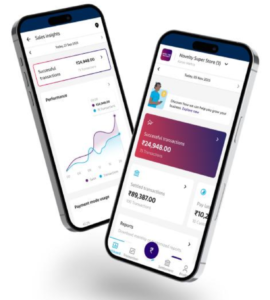
Advantages of UPI
- Convenience: Users can initiate payments through supported applications without manually entering full bank details for every transaction.
- Interoperability: Participating customers generally do not need the same payment application.
- Merchant acceptance: QR-based payment collection can be practical for many small businesses.
- Digital records: Transaction histories can support personal accounting and business reconciliation.
- Multiple use cases: UPI supports person-to-person payments, merchant transactions and eligible recurring-payment arrangements.
- Customer choice: Multiple applications can compete over usability and services.
- Potential financial inclusion: Additional payment channels may help some people access digital payments.
- International opportunities: Supported arrangements can make selected overseas merchant payments more convenient.
Disadvantages of UPI
- Device and connectivity dependence: Common app-based payments require suitable devices and functioning services.
- Technical failures: Banking or network problems can cause pending and failed transactions.
- Fraud risks: Impersonation, malicious links and fraudulent requests can cause financial losses.
- Limited reversibility: Authorized payments generally cannot simply be stopped after initiation.
- Customer-support challenges: Disputes may involve multiple institutions.
- Digital literacy gaps: Some users may find setup, authentication and fraud warnings difficult.
- Privacy concerns: Data collection, retention and governance require ongoing attention.
- Economic sustainability: High transaction volume does not automatically make every participant profitable.
- Unequal access: People without suitable accounts, devices, connectivity or digital skills may face barriers.
UPI offers significant convenience, but it should not be treated as risk-free or universally accessible.
7. UPI Security and Fraud Prevention
Security is essential to the customer experience. Users need to understand what they are authorizing and where to report suspicious activity.
Essential UPI Safety Rules
- Never share your UPI PIN with another person.
- Do not enter your PIN simply to receive money.
- Verify the recipient and amount before authorizing a payment.
- Do not trust payment screenshots alone; check the actual transaction status.
- Treat unexpected collect requests with caution.
- Avoid unknown screen-sharing or remote-access instructions.
- Obtain customer-care details from official bank or payment-provider channels.
What Should You Do After UPI Fraud?
If you suspect fraud:
- Contact your bank and payment application immediately.
- Preserve transaction references, messages and other evidence.
- Report suspected cybercrime through the official portal at https://www.cybercrime.gov.in/ or call 1930, the national cybercrime helpline listed on the official portal.
- Follow the bank’s complaint and dispute-resolution process.
- If an eligible complaint remains unresolved, review the RBI Complaint Management System at https://cms.rbi.org.in/.
A refund is not guaranteed in every case. The outcome depends on the circumstances, applicable rules and the action taken by the relevant institutions.
8. Business and Merchant Marketing Opportunities Using UPI

UPI is not only a way to collect payments. It is also part of the customer journey.
A clear payment experience may reduce checkout friction, but businesses should measure actual results rather than assume that offering UPI automatically increases revenue.
UPI Opportunities for Different Businesses
Small retailers: Display the correct merchant QR code and confirm payment through reliable transaction records.
Restaurants and cafés: Make payment instructions clear and reconcile orders against confirmed receipts.
E-commerce businesses: Offer UPI alongside relevant alternatives and measure checkout completion.
D2C brands: Monitor payment failures, abandoned checkouts and refund turnaround.
Freelancers: Use verified payment details, invoices and clear payment confirmation.
Subscription businesses: Explain eligible recurring mandates, authorization, cancellation and renewal terms.
Educational institutions: Use clear payment references and reconciliation processes for fee collection.
Healthcare providers: Provide secure payment workflows and clear receipts.
Local service businesses: Confirm receipt before closing a transaction or releasing goods.
Rural enterprises: Offer practical payment instructions and alternatives for customers who cannot use smartphone-based payments.
Five Practical Ways to Improve UPI Payment Experiences
1. Make payment acceptance visible. Display the correct QR code where customers can easily find it.
2. Confirm payments reliably. Use the merchant’s own transaction records or an authorized integration rather than relying only on customer screenshots.
3. Reduce checkout friction. Test payment instructions, error messages and fallback options.
4. Improve reconciliation. Match transaction references against orders, invoices, refunds and bank statements.
5. Design transparent promotions. Clearly disclose reward conditions, expiry dates and eligibility rules.
Businesses using UPI as a payment method need a reliable checkout and collection process. Businesses marketing a UPI-enabled product need a broader strategy covering positioning, acquisition, onboarding, retention, support and compliance.
9. UPI Business Model and Economic Sustainability
UPI is shared infrastructure, not one consumer-facing company. Its participants have different operating costs and potential revenue models.
Banks maintain accounts and participate in payment processing. Payment applications develop customer interfaces and may offer additional services. Merchant service providers can supply business tools, while software companies can provide reconciliation and reporting solutions.
Potential revenue sources across the wider ecosystem include permitted service fees, merchant software, value-added business services, eligible financial products and applicable institutional arrangements.
These possibilities should not be confused with a claim that every provider earns revenue from every UPI transaction.
Why High Transaction Volume Does Not Guarantee Profitability
Three factors are particularly important:
- Operating costs: Infrastructure, security, compliance and customer support require continuing investment.
- Direct payment revenue constraints: Zero-MDR rules for covered categories limit some direct acceptance-fee models.
- Incentive dependence: Promotions can encourage trial but cannot automatically create sustainable unit economics.
A sustainable ecosystem needs to balance affordability, reliability, customer protection and the economics of participating institutions.
10. UPI’s Impact on India’s Digital Economy

UPI has helped make digital payments practical across many everyday transactions, but its economic effects should be evaluated carefully.
Small-Business Digitization
Digital collections can help businesses maintain electronic transaction records and reduce some cash-handling tasks. Integration with suitable accounting tools may also improve reconciliation.
However, digital payments do not automatically mean that a business is fully formalized or that all revenue is recorded correctly.
E-Commerce and Service Businesses
UPI provides an alternative to cards, wallets and other supported payment methods. Businesses can use it for eligible checkout, service payments and recurring mandates.
The commercial benefit depends on the customer base, reliability, support quality and payment experience.
Financial Inclusion
Digital-payment infrastructure can make some services easier to access, but practical access still depends on bank accounts, suitable devices or alternative channels, connectivity, accessible design and digital literacy.
UPI is an important inclusion tool, not proof that every person has equal access to financial services.
Competition and Innovation
The shared infrastructure enables multiple applications to compete over the customer experience rather than requiring every provider to build an entirely separate payment network.
At the same time, market concentration, data governance, operational resilience and sustainable investment remain important considerations.
11. UPI International Expansion
UPI’s international development includes several different types of arrangements.
International merchant acceptance: Eligible Indian users can pay participating overseas merchants through supported UPI applications.
Cross-border payment-system links: Compatible payment systems may connect for specified transaction types.
Inbound visitor services: Eligible international visitors may have access to supported payment arrangements in India.
International transfer services: Certain institutions may support specific cross-border account or transfer products under applicable rules.
These models are not interchangeable. Merchant QR acceptance does not automatically mean that every person-to-person transfer or remittance service is available internationally.
Opportunities and Challenges
International UPI arrangements may improve convenience for eligible users and participating merchants. However, expansion requires attention to local regulations, licensing, foreign exchange, settlement, fraud monitoring, customer support and technical compatibility.
For accurate country-level reporting, check the operational service details rather than treating a partnership announcement as proof of universal availability.
Official source: https://www.npci.org.in/product/upi-global-acceptance
12. UPI SWOT Analysis
Strengths
- Interoperable payment experiences.
- Convenient bank-account-linked transactions.
- Broad ecosystem participation.
- QR-based merchant acceptance.
- Multiple supported payment use cases.
Weaknesses
- Dependence on participating institutions and infrastructure.
- Technical failures and pending transactions.
- Digital-literacy and access gaps.
- Limited direct monetization for certain payment categories.
- Customer-support and dispute-resolution friction.
Opportunities
- More international interoperability.
- Better merchant reconciliation and business software.
- Accessible payment interfaces.
- Recurring and delegated payments.
- Responsible integration with financial services.
Threats
- Fraud and cyberattacks.
- System outages and operational concentration.
- Regulatory and policy changes.
- Unsustainable incentives.
- Consumer distrust following major service or security incidents.
This SWOT analysis is a strategic assessment, not an official NPCI classification.
13. Future of UPI: 2027 and Beyond
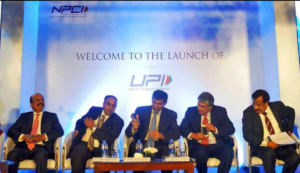
The future of UPI will depend on improvements in reliability, accessibility, customer protection and sustainable economics as much as on new features.
AI-Assisted Payment Experiences
AI could help customers understand invoices, receive payment support or navigate eligible payment journeys. Such applications would still need explicit authorization, accurate payment details, secure handling and regulatory compliance.
AI should not be treated as proof that a payment has been completed.
Better Fraud Detection
Further improvements in suspicious-transaction monitoring and customer warnings could help reduce certain risks. Effectiveness would depend on data quality, operational controls, privacy requirements and the changing methods used by fraudsters.
Credit-Linked Payments
Eligible credit-linked UPI products may provide additional payment choices. Their growth will depend on lending rules, eligibility, affordability and responsible-credit practices.
Recurring and Delegated Payments
Recurring mandates and delegated payment arrangements may support subscriptions, household payments and selected business workflows. Clear permissions, spending limits and cancellation options will remain important.
International Interoperability
Additional connections between payment systems could improve convenience for eligible users, but local regulation, foreign exchange, settlement and merchant acceptance will continue to determine practical availability.
Merchant Automation and Analytics
Better reconciliation, accounting integrations and payment reporting could reduce manual work for businesses. These benefits depend on integration quality and accurate transaction records.
These developments are opportunities or continuing trends, not guaranteed outcomes for 2027.
14. Lessons for Digital Marketers and Entrepreneurs

UPI’s development provides several practical lessons for businesses.
Solve a frequent problem. Build products around genuine customer needs rather than relying on advertising alone.
Simplify onboarding. Reduce unnecessary steps and measure successful activation.
Build trust. Provide clear pricing, secure workflows and accessible support.
Design for distribution. Partnerships, integrations, merchant relationships and referrals can complement advertising.
Measure retention. Track repeat usage, customer satisfaction, churn and completed transactions.
Use incentives carefully. Measure whether promotions lead to sustainable customer relationships rather than temporary activity.
Make the journey measurable. Identify where customers drop out and improve the most important friction points.
Build sustainable economics. Plan for service, infrastructure, compliance and security costs.
These principles can apply to fintech startups, e-commerce businesses, service brands, SaaS companies and digital marketing agencies.
15. What Businesses Can Learn from UPI’s Marketing Strategy
UPI demonstrates how technology, interoperability, accessible distribution and customer experience can reinforce one another.
Businesses can apply the same broad principles by simplifying customer journeys, improving brand positioning, making services easier to discover, building trust and measuring meaningful conversions.
For a fintech startup, this may mean improving the first successful transaction. For an e-commerce business, it may mean reducing checkout friction. For a service brand, it may mean making its offer clearer and improving lead follow-up.
2 NICE LIFE — Your Growth Partner helps businesses explore digital marketing, lead generation, brand positioning, digital advertising and conversion optimization.
To learn more about practical strategies for business growth, visit https://2nicelife.com/.
The objective is not to replicate UPI’s infrastructure or scale, but to apply its most relevant lesson: make the customer experience useful, understandable and measurable.
16. Frequently Asked Questions About UPI
What is UPI and who developed it?
UPI stands for Unified Payments Interface. It was developed by NPCI to support interoperable digital payments through participating banks and payment applications.
When was UPI launched in India?
NPCI records April 2016 as the UPI pilot launch period.
How does UPI work technically?
A customer initiates a payment through a supported application. The request is processed through the applicable UPI infrastructure and participating institutions, and a transaction status is returned.
What is the difference between UPI and a UPI payment app?
UPI is the shared payment infrastructure. A payment app provides the interface for customers to access supported UPI services.
How is UPI different from IMPS, NEFT and RTGS?
UPI is an interoperable payment interface. IMPS supports immediate electronic transfers, NEFT supports electronic fund transfers and RTGS provides real-time gross settlement.
What are the main advantages of UPI?
The main advantages include convenience, interoperability, QR acceptance, digital records and support for multiple person-to-person and merchant-payment use cases.
What are the disadvantages and risks of UPI?
The risks include fraud, mistaken transfers, pending payments, service outages, digital-access barriers and difficulties resolving some disputes.
Is UPI free for consumers and merchants?
Many ordinary bank-account-linked UPI payments do not carry a direct customer payment fee. Zero-MDR rules apply to specified categories, but other UPI-related services may have different terms.
How does UPI make money?
UPI is shared infrastructure rather than one consumer application. Different participants may support operations through permitted service fees, merchant tools, adjacent financial services and eligible institutional incentives.
Is UPI safe for digital payments?
UPI uses authentication and transaction controls, but no payment system is immune to fraud. Keep your PIN confidential, verify recipients and report suspected fraud promptly.
What is the difference between UPI and digital wallets?
A typical UPI payment authorizes a transaction from a linked bank account. A stored-value wallet may hold a separate prepaid balance.
Can UPI work without a smartphone or internet connection?
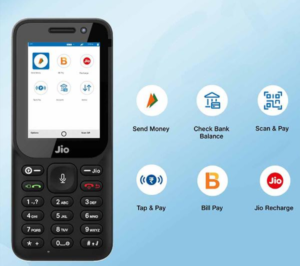
Certain alternative initiatives, including UPI 123PAY, support selected feature-phone use cases. UPI Lite supports specific low-value payment experiences. Availability and offline functionality depend on the service, device and transaction type.
How do UPI QR codes work?
A compatible app reads payment details or an identifier from the QR code. The customer verifies the recipient and amount, authorizes the payment and checks the transaction status.
Can UPI be used internationally?
UPI is available for selected international merchant-acceptance and cross-border arrangements. Availability depends on the country, participating merchant, app, bank and transaction type.
How has UPI evolved from 2016 to 2026?
UPI has evolved from its 2016 pilot into a large-scale payment ecosystem supporting merchant QR codes, consumer applications, recurring payments, selected feature-phone and low-value payment options, credit-linked products and international initiatives.
What marketing strategies helped increase UPI adoption?
Relevant factors include convenience, interoperability, merchant acceptance, public awareness, private-app distribution and repeated everyday use. The contribution of each factor should not be quantified without supporting evidence.
What is the future of UPI after 2026?
Potential areas include international interoperability, better fraud prevention, recurring and delegated payments, merchant automation and more accessible interfaces.
What can businesses learn from UPI’s marketing strategy?
Businesses can learn to solve frequent customer problems, simplify onboarding, build trust, measure repeat use and design sustainable business models.
17. Conclusion: The Future of UPI Marketing Strategy and Technology

UPI’s journey from its 2016 pilot launch to the large-scale digital-payment ecosystem recorded in 2026 demonstrates how technology, policy, distribution and customer experience can reinforce one another.
Its marketing significance lies not in a single advertising campaign but in the wider ecosystem of interoperable payments, participating banks, competing applications, QR acceptance and everyday use cases.
However, UPI’s scale does not remove the need for fraud prevention, reliable infrastructure, accessible support, privacy safeguards and sustainable economics.
Cash, cards, bank transfers, wallets and international payment networks will continue to serve different needs. The future is more likely to involve a wider choice of payment experiences than the universal elimination of other payment methods.
For marketers and entrepreneurs, the central lesson is simple: build genuine utility, reduce friction, earn customer trust and measure sustainable outcomes.
Recommended Internal Links
- ChatGPT Ads guide: https://2nicelife.com/chatgpt-ads-complete-guide/
- Zomato Marketing Strategy: https://2nicelife.com/zomato-marketing-strategy/
- 2 NICE LIFE homepage: https://2nicelife.com/
Authoritative External Links
- NPCI UPI statistics: https://www.npci.org.in/product/upi/product-statistics
- NPCI UPI FAQs: https://www.npci.org.in/what-we-do/upi/faqs
- NPCI milestones: https://www.npci.org.in/who-we-are/milestone
- NPCI Global Acceptance: https://www.npci.org.in/product/upi-global-acceptance
- Reserve Bank of India: https://www.rbi.org.in/
- RBI Complaint Management System: https://cms.rbi.org.in/
- National Cyber Crime Reporting Portal: https://www.cybercrime.gov.in/
- Central Bank of Brazil Pix statistics: https://www.bcb.gov.br/en/financialstability/pixstatistics
Final Publication Checklist
- Verify the latest NPCI transaction statistics.
- Confirm current transaction limits and feature eligibility.
- Check government incentive policies and their effective dates.
- Verify country-by-country international acceptance.
- Validate specific payment-app campaign claims.
- Check official complaint procedures and security guidance.
- Test all links and review image filenames and alt text.
- Review the article for accuracy, readability and duplication before publication.